What Were Persian Coins Made From? Gold, Silver, and Alloy Metallurgy
Discover what Persian coins were made from across 2,500 years, exploring the refining techniques, weight standards, and metallurgy of darics, drachms, and dinars.
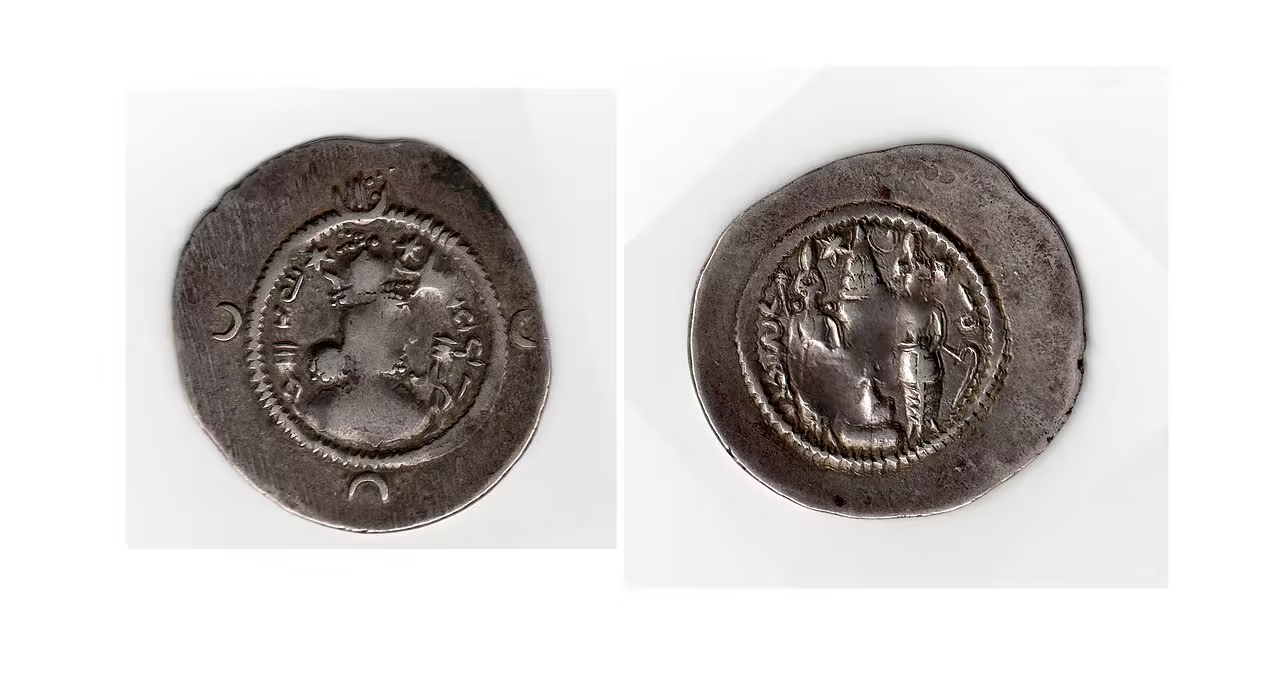
Metallurgy was the ultimate foundation of imperial sovereignty and commercial trust in ancient and medieval Iran. From the moment Darius I (r. 522–486 BCE) reformed the fiscal infrastructure of the Achaemenid Empire, the composition of circulating specie was treated as a vital state secret and an instrument of geopolitical prestige. The metallic purity of a coin directly reflected the administrative capacity of the crown, determining whether imperial currency could circulate freely beyond its political borders or suffer rejection in foreign marketplaces.
Determining what metals composed these currencies requires modern archaeometric analysis, including X-ray fluorescence (XRF) and particle-induced X-ray emission (PIXE). These scientific methods reveal a dynamic technological history: Persian metallurgists were not merely melting found ores, but systematically purifying metals through complex thermodynamic processes. Over millennia, Persian mints responded to conquests, fiscal crises, and trade fluctuations by calibrating their alloys, shifting from natural electrum and refined bullion to complex quaternary mixtures and modern industrial steels.
Key facts
- Achaemenid gold darics maintained exceptional metallurgical purity, consistently testing between 95.8% and 98% elemental gold.
- Achaemenid silver sigloi averaged 5.6 grams and adhered to a silver fineness standard of roughly 90% to 95%.
- Sasanian silver drachms achieved an unprecedented 90% to 95% purity across hundreds of millions of thin-flan coins.
- Parthian tetradrachms suffered severe deliberate debasement, dropping from 90% silver down to below 40% by the late second century CE.
- Islamic gold dinars struck in Iranian mints followed the Qur'anic mithqal weight of approximately 4.25 grams of pure gold.
- Qajar fractional currency transitioned in 1877 from hand-hammered copper pul to machine-struck bronze and nickel-brass alloys.
What were Persian coins made from? Achaemenid gold and silver metallurgy
When asking what Persian coins were made from during the founding era of Iranian numismatics, the answer lies in the classic bimetallic reform of Darius I (r. 522–486 BCE). Following the Persian conquest of Lydia by Cyrus the Great (r. 559–530 BCE) in 546 BCE, the Achaemenids inherited the Lydian practice of striking currency. However, whereas the Lydians originally struck naturally occurring electrum—an unpredictable natural alloy of gold and silver—Achaemenid metallurgists separated these metals to create the world's first true imperial bimetallic currency.
The primary gold denomination was the daric (dareikos), weighing approximately 8.4 grams. Modern spectroscopic analyses of darics preserved in institutions like the British Museum indicate an astonishingly consistent gold content of 95.8% to 98%, with the remainder consisting of trace silver (1% to 3%) and copper (less than 1%). To achieve such purity from alluvial or mined gold ores containing natural silver impurities, the royal mint at Sardis and imperial centers in Persis utilized cementation.
The complementary silver coin was the siglos (Old Persian shiklu), struck on an imperial weight standard of roughly 5.6 grams. The siglos possessed a silver fineness fluctuating between 90% and 95%. Silver was extracted primarily from lead-bearing argentiferous galena ores using cupellation. In this process, metallurgists melted lead-silver ores inside porous bone-ash or clay hearths under an oxidizing blast of air. The base lead oxidized into litharge (lead monoxide, PbO) and was skimmed off or absorbed into the furnace lining, leaving a molten button of refined elemental silver.
Flan production and striking techniques in ancient Iran
The preparation of coin blanks, or flans, dictated the physical appearance, thickness, and metallographic structure of Iranian currency. Mint workers did not cut coins from rolled sheet metal; rather, they used pyrotechnic casting methods that evolved through three distinct technical stages:
- Globule casting: Technicians poured measured charges of molten gold or silver into open terracotta indentations or dropped liquid metal droplets into water to produce spherical or bean-shaped beads.
- Annealing: Because rapid cooling induced crystalline brittleness, blanks were reheated in annealing furnaces below their melting point to restore ductility, preventing the metal from shattering under the hammer.
- Die striking: The softened flan was positioned between an engraved, anvil-mounted lower die (obverse) and a hand-held upper punch die (reverse), then struck with a heavy iron mallet.
Achaemenid sigloi reveal the limitations of early casting: their flans were thick, oval, and compact, often bearing deep punch impressions that displaced significant metal without expanding the coin's diameter. Sasanian and Islamic mints later perfected flan-flattening techniques to overcome this restriction.
Parthian and Sasanian silver metallurgy: From cast flans to paper-thin drachms
The metallurgical trajectory of the Parthian Empire (247 BCE – 224 CE) and the Sasanian Empire (224–651 CE) showcases two radically different monetary philosophies. The Parthian Arsacids operated a dual currency system: imperial silver drachms struck at domestic highland mints such as Ecbatana (modern Hamadan) and Hekatompylos, alongside massive billon tetradrachms produced at the cosmopolitan commercial hub of Seleucia on the Tigris.
While Parthian royal drachms maintained a stable silver content of 85% to 92% throughout most of the dynasty, Parthian tetradrachms suffered systematic debasement. Under rulers such as Vologases I (r. 51–78 CE) and Vologases IV (r. 147–191 CE), mint masters systematically substituted copper for silver to fund military campaigns against Rome. By the late second century CE, the Seleucia tetradrachm had transitioned from an imperial silver denomination into a billon coin containing less than 40% silver, exhibiting a dull, greyish surface patina.
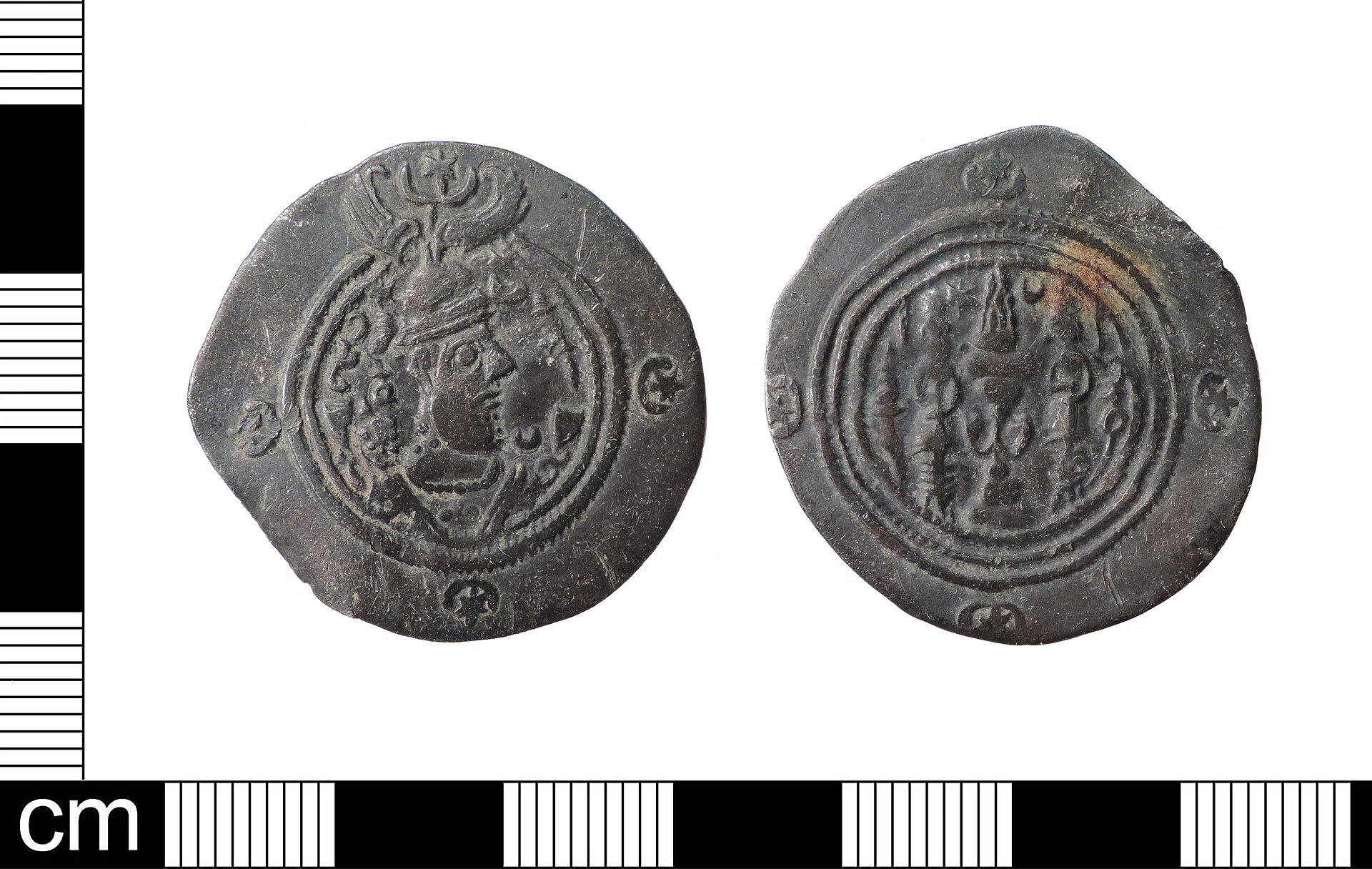
When Ardashir I (r. 224–242 CE) founded the Sasanian dynasty, he instituted a total purge of debased currency. The Sasanians established a monetary system centered almost exclusively on a single denomination: the silver drahm (drachm), weighing precisely 4.0 to 4.2 grams. Sasanian drachms are universally recognized by their paper-thin fabric and large diameter (approaching 30 mm under late rulers like Khosrow II, r. 590–628 CE).
To produce these exceptionally wide, wafer-thin silver flans without tearing the metal during striking, Sasanian mints adopted a specialized technique:
- Molten silver of 90% to 95% purity was cast into circular disc moulds.
- Each cast disc was cold-hammered or warm-rolled into a uniform sheet-like thickness of less than one millimeter.
- The flan was subjected to secondary annealing to alleviate mechanical stress before being struck with shallow-relief dies.
- Strict quality control was maintained by regional mint signatures engraved directly onto the reverse die, including BYSh (Bishapur), ST (Stakhr), and WH (Weh-Andiyok-Shapur).
Fractional silver coins—the obol (dang) and hemiobol—along with rare ceremonial gold dinars (denag) and local copper-bronze issues (pashiz) supplemented the imperial silver drachm.
Medieval Islamic dinars, dirhams, and civic copper fals
Following the Arab-Islamic conquest of the Sasanian Empire in the mid-seventh century CE, early governors struck hybrid Arabo-Sasanian silver drachms that preserved Sasanian visual designs, mint signatures, and 90% silver alloys, adding brief Arabic marginal legends such as bismillah ("in the name of God"). In 697 CE, Umayyad Caliph Abd al-Malik ibn Marwan introduced an epigraphic currency reform that abolished royal portraiture in favor of purely textual Islamic inscriptions.
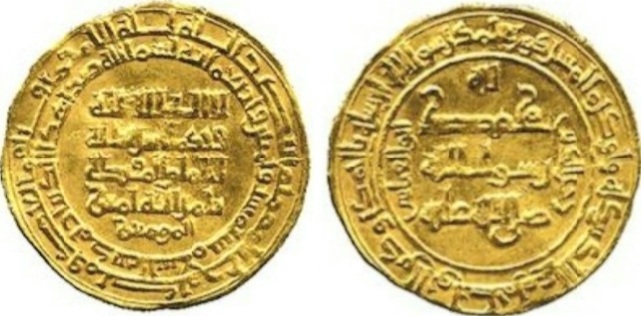
In Iranian mint cities like Rayy, Isfahan, Merv, and Nishapur, medieval metallurgists refined alloys to comply with canonical legal standards:
- The gold dinar was modeled after the Roman-Byzantine solidus but struck to the legal Islamic weight standard of one mithqal (~4.25 grams). Under the Abbasid Caliphate and regional dynasties such as the Samanids, Buyids, and Seljuks, Iranian dinars maintained an exceptional purity of 93% to 98% gold.
- The silver dirham was fixed at roughly 2.97 grams (seven-tenths of a mithqal). Seljuk and Ilkhanid silver dirhams maintained a fineness between 88% and 96% silver.
- The base-metal fals (plural fulus) served daily petty transactions. Unlike gold and silver, which were struck under strict imperial monopoly, the fals was typically an autonomous municipal issue made from unrefined copper, leaded bronze, or recycled pot metals.
| Historical Era / Dynasty | Primary Denomination | Dominant Metal | Target Weight (g) | Typical Fineness (%) |
|---|---|---|---|---|
| Achaemenid (550–330 BCE) | Daric | Gold | 8.35–8.42 g | 95.8% – 98.0% Au |
| Achaemenid (550–330 BCE) | Siglos | Silver | 5.50–5.60 g | 90.0% – 95.0% Ag |
| Parthian (247 BCE – 224 CE) | Royal Drachm | Silver | 3.90–4.10 g | 85.0% – 92.0% Ag |
| Parthian (Late 2nd c. CE) | Tetradrachm | Billon (Cu-Ag) | 12.50–14.00 g | 30.0% – 45.0% Ag |
| Sasanian (224–651 CE) | Drahm | Silver | 4.05–4.20 g | 90.0% – 96.0% Ag |
| Abbasid / Iranian dynasties | Dinar | Gold | 4.15–4.25 g | 93.0% – 98.0% Au |
| Safavid (1501–1736 CE) | Abbasi | Silver | 7.60–7.70 g | 90.0% – 95.0% Ag |
| Qajar (Post-1877 CE) | Qiran | Silver | 4.80–5.00 g | 90.0% (Later 60.0%) Ag |
Safavid, Qajar, and modern industrial alloys
The early modern era transformed Iranian monetary metallurgy through global trade. Under the Safavid Empire (1501–1736 CE), Shah Abbas I (r. 1588–1629) introduced the silver abbasi (initially around 7.7 grams), alongside the gold ashrafi. Because Iran possessed few active domestic silver mines, the empire functioned as a massive metallurgical siphon, absorbing American and European silver through Ottoman and Persian Gulf maritime trade. Foreign silver thalers and Spanish pieces-of-eight were remelted and refined in mints at Tabriz, Isfahan, and Tiflis, maintaining an elevated silver fineness of over 90%.
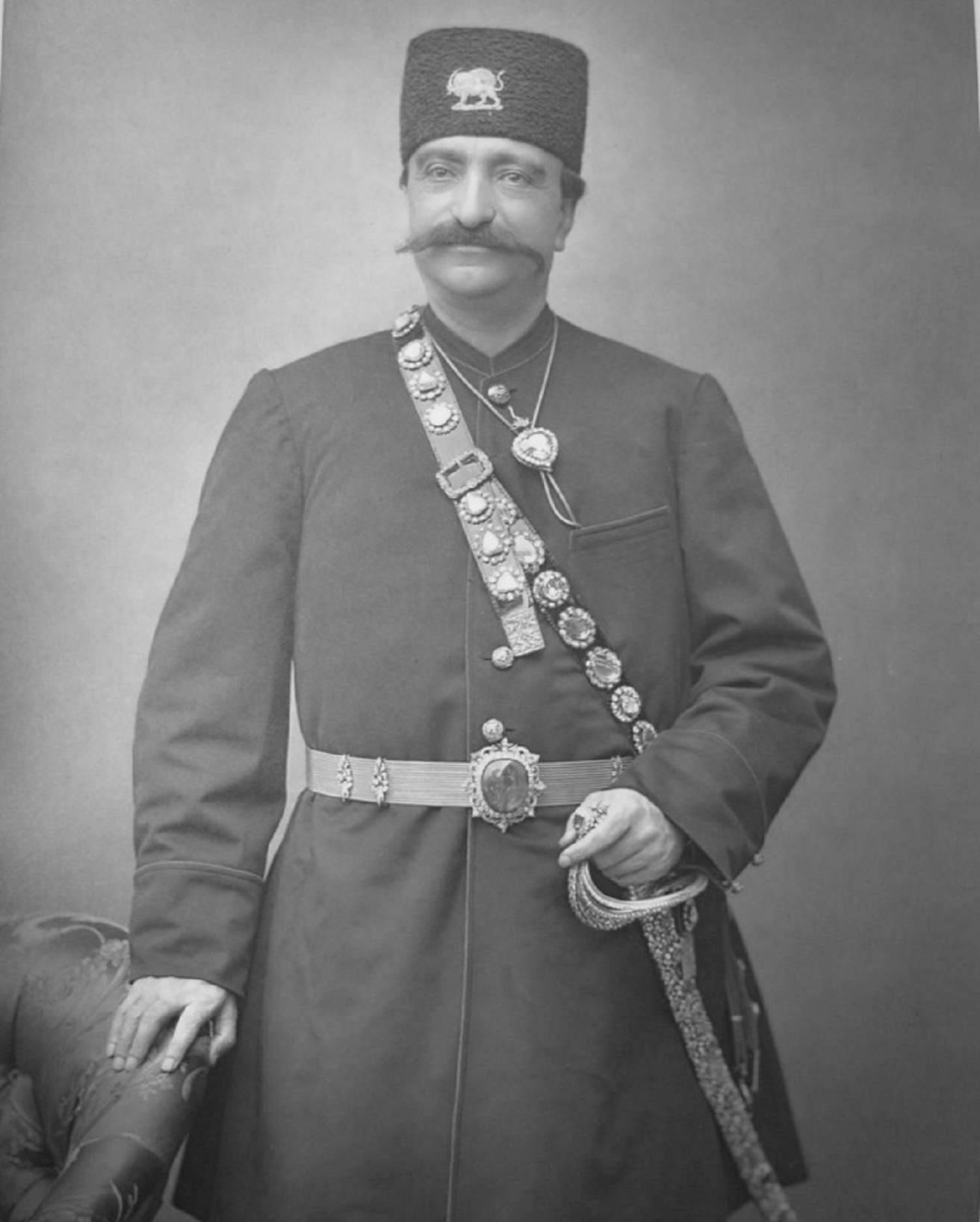
By the Qajar dynasty (1789–1925 CE), political decentralization and fiscal deficits degraded alloy consistency. Until the late nineteenth century, Iran operated dozens of provincial hammered mints producing zarb-e chekoshi (hand-hammered coinage). Because these regional operations lacked standardized pyrometric oversight, local coppers and fractional silver coins varied widely in their alloy ratios.
In 1877, Naser al-Din Shah Qajar (r. 1848–1896) mechanized Iranian coin production by opening a centralized European-style steam mint in Tehran (Zarrabkhaneh-ye Dawlati). Mechanization shifted the metallurgical composition of Iranian coins:
- The silver qiran was calibrated to a strict 90% silver and 10% copper alloy, though severe economic inflation under Ahmad Shah Qajar (r. 1909–1925) forced a subsequent reduction to 60% silver in the early 1920s.
- The gold toman was produced in uniform 90% gold / 10% copper alloys on modern screw presses using imported European planchets.
- Copper pul were discontinued in favor of standardized industrial bronze (95% copper, 4% tin, 1% zinc) and nickel-brass.
In the twentieth century, the Pahlavi state eliminated precious metals from circulating commerce. Following international monetary trends, silver disappeared from daily transactions by the mid-1940s. Iranian coinage switched entirely to modern industrial alloys: cupro-nickel (75% copper, 25% nickel), aluminium-bronze, and, in the post-1979 Islamic Republic, magnetic nickel-plated steel and copper-plated zinc.
Frequently asked questions
What were Persian coins made from in the ancient Achaemenid Empire?
Achaemenid Persian coins were made from highly refined elemental gold and silver. The famous gold daric was struck from nearly pure gold averaging 95.8% to 98% purity, while the silver siglos was struck from refined silver with an alloy fineness exceeding 90%, purified through salt cementation and cupellation.
Why did the Sasanians make their silver coins so thin?
Sasanian mints produced paper-thin silver drachms to maximize coin diameter and display clear, highly visible royal and religious iconography without increasing coin weight. Hammering a 4.15-gram blank into a thin, broad disc enabled large, uniform dies while discouraging fraudulent metal shaving, as any clipping along the thin outer beaded border was instantly noticeable.
Did ancient Persia use bronze or copper coins for everyday transactions?
Yes, ancient Persian states used bronze and copper coins for minor local commerce, though they were rarely struck to imperial weight standards. The Achaemenids, Parthians, and Sasanians produced small bronze and copper denominations—often called chalkoi under Greek influence or pashiz in Middle Persian—for municipal marketplaces where precious-metal coins were too valuable for daily food purchases.
How did Iranian mints test coin metal purity without modern laboratories?
Historical Iranian mints relied primarily on fire assays and the touchstone method (sang-e mahak). Assayers rubbed a coin across a dark siliceous stone to produce a metallic streak, comparing its coloration against streaks drawn from standardized test needles made with known alloy proportions of gold, silver, and copper.
When did Iran stop using silver and gold for circulating money?
Iran ended the use of gold and silver as circulating commercial currencies during the early-to-mid twentieth century under the Pahlavi dynasty. While gold tomans and silver rials were issued as standard legal tender through the 1930s, circulating silver was phased out after World War II, transitioning to industrial base alloys like cupro-nickel and aluminium-bronze.
Conclusion
Investigating what Persian coins were made from reveals an unbroken metallurgical tradition spanning more than two millennia. From the moment Darius I refined alluvial gold to create the pristine daric, Iranian empires recognized that monetary integrity was inseparable from elemental purity. Sasanian innovations in wide, paper-thin silver flan production demonstrated mechanical mastery over precious metals, while Islamic dinars and dirhams set enduring analytical benchmarks for weight and alloy consistency.
Whether examining the hyper-purified gold of Persepolis, the billon tetradrachms of Parthian Seleucia, or the machine-pressed nickel-brass of the modern Tehran mint, Iranian coinage reflects the material science and fiscal challenges of its time. Modern archaeometric testing continues to decode these metallic compositions, illuminating how Persian mint masters transformed raw mountain ores into timeless emblems of imperial power.
Sources & further reading
- British Museum. Catalogue of the Coins of the Persian Empire. Department of Coins and Medals, British Museum.
- Göbl, Robert. Sasanian Numismatics. Klinkhardt & Biermann, Braunschweig, 1971.
- Sellwood, David. An Introduction to the Coinage of Parthia. Spink & Son, London, 1980.
- American Numismatic Society. Sylloge Nummorum Sasanidarum (SNS). Publications of the ANS and Austrian Academy of Sciences.
- Encyclopædia Iranica. Coins and Coinage: Pre-Islamic and Islamic Metallurgy in Iran. Columbia University Press.