Timeline of Persian Coinage
Two and a half millennia in twenty-two moments — from the first electrum coins on the western edge of Media to the modern rial of the Islamic Republic.

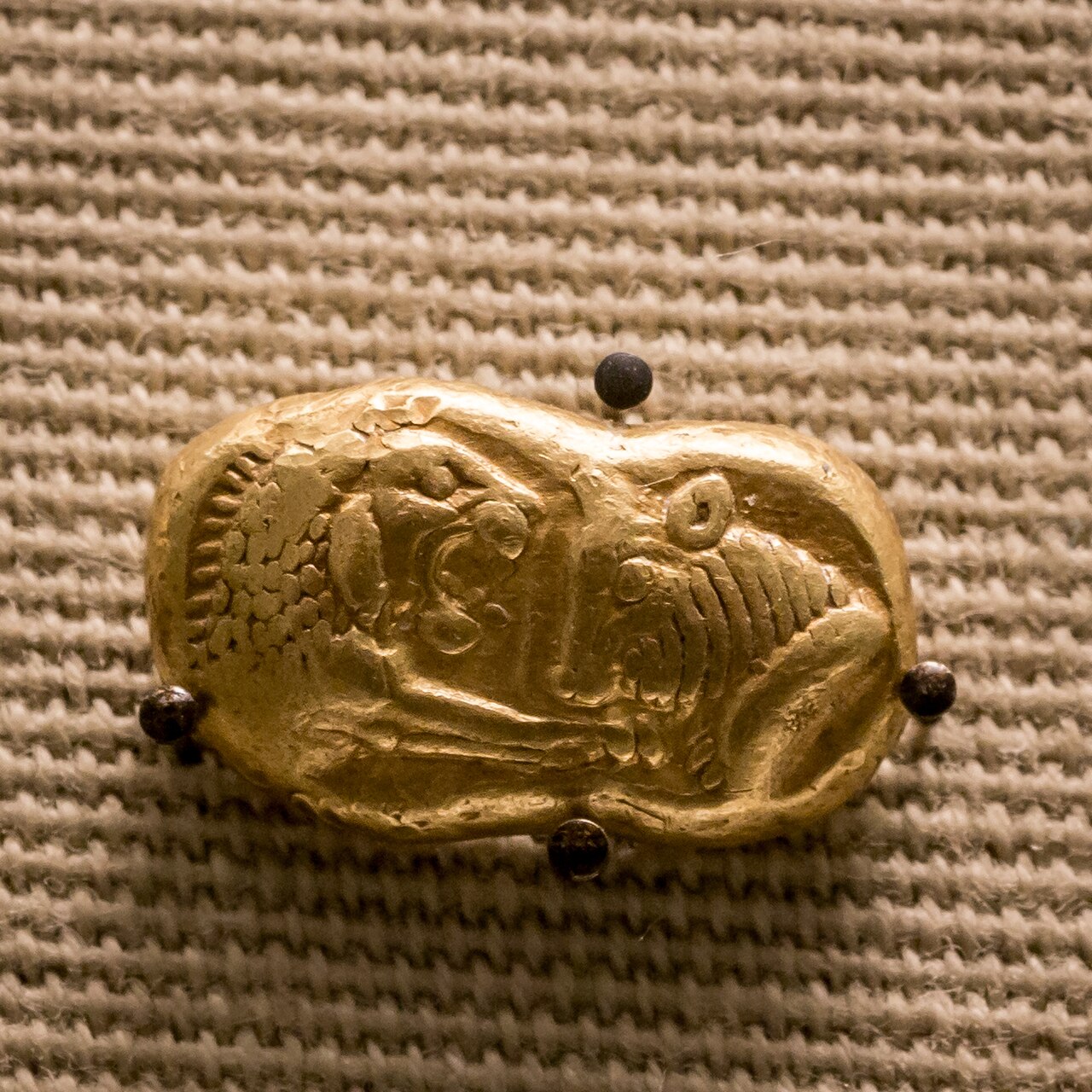 c. 610 BCE
Lydian electrum staters
The first true coins — electrum trites bearing a lion's head — circulate on the western edges of Media.
View era →- c. 546 BCE
Cyrus conquers Lydia
The Achaemenid empire inherits Sardis, the world's most advanced mint, but continues to circulate Lydian gold and silver.
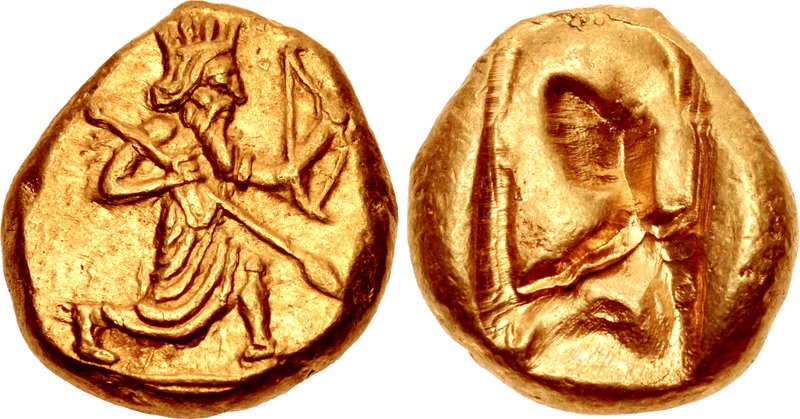 c. 515 BCE
Darius reforms imperial coinage
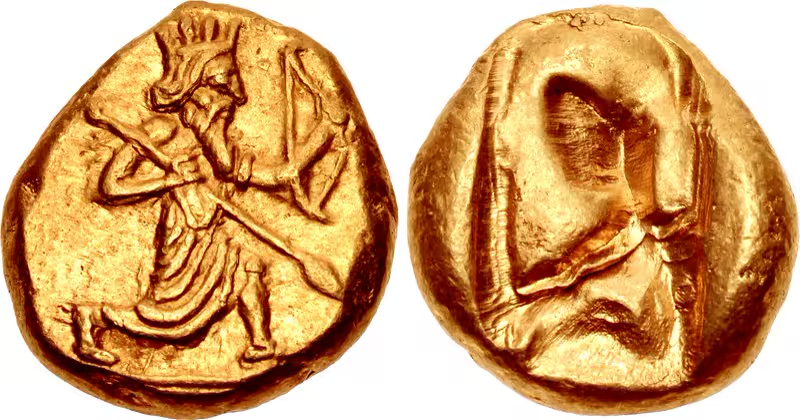
The gold daric and silver siglos, both bearing the archer-king, become the empire's standard.
View era →- 330 BCE
Alexander destroys Persepolis
Alexander's Macedonians overstrike daric dies; double-darics continue under satrapal authority.
 247 BCE
Arsaces founds the Parthian state
Silver drachms with the seated archer reverse begin a 470-year run.
View era →- 141 BCE
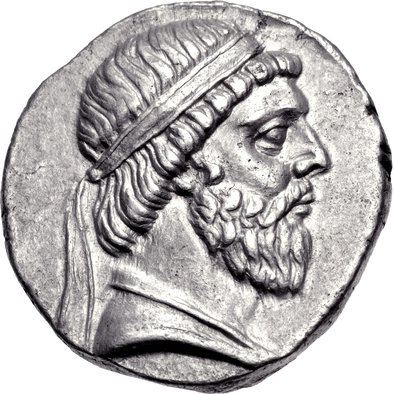
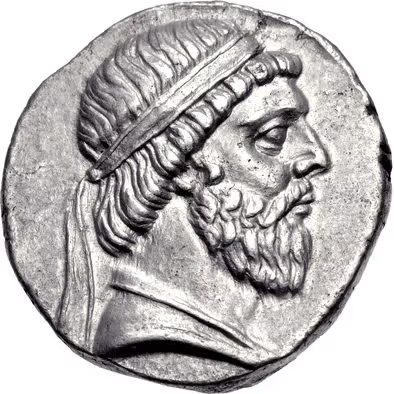
Mithradates I takes Seleucia
Greek-style tetradrachms become a major Parthian denomination, dated by Seleucid Era.
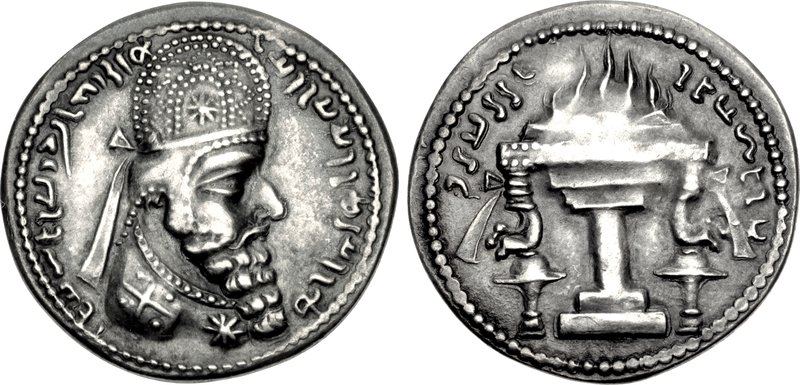 224 CE
Ardashir defeats Artabanus IV
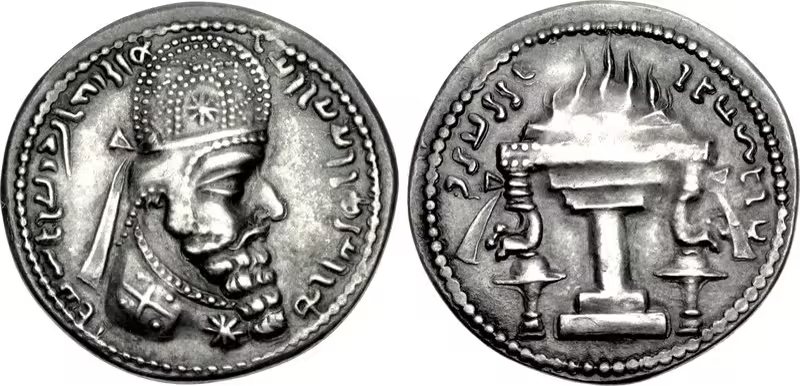
The Sasanian Empire is founded; fire-altar reverses replace the Parthian archer.
View era →- c. 500 CE
Khosrow I's thin drachm reform
Broad, thin silver drachms are struck in such volume that they remain abundant 1,500 years later.
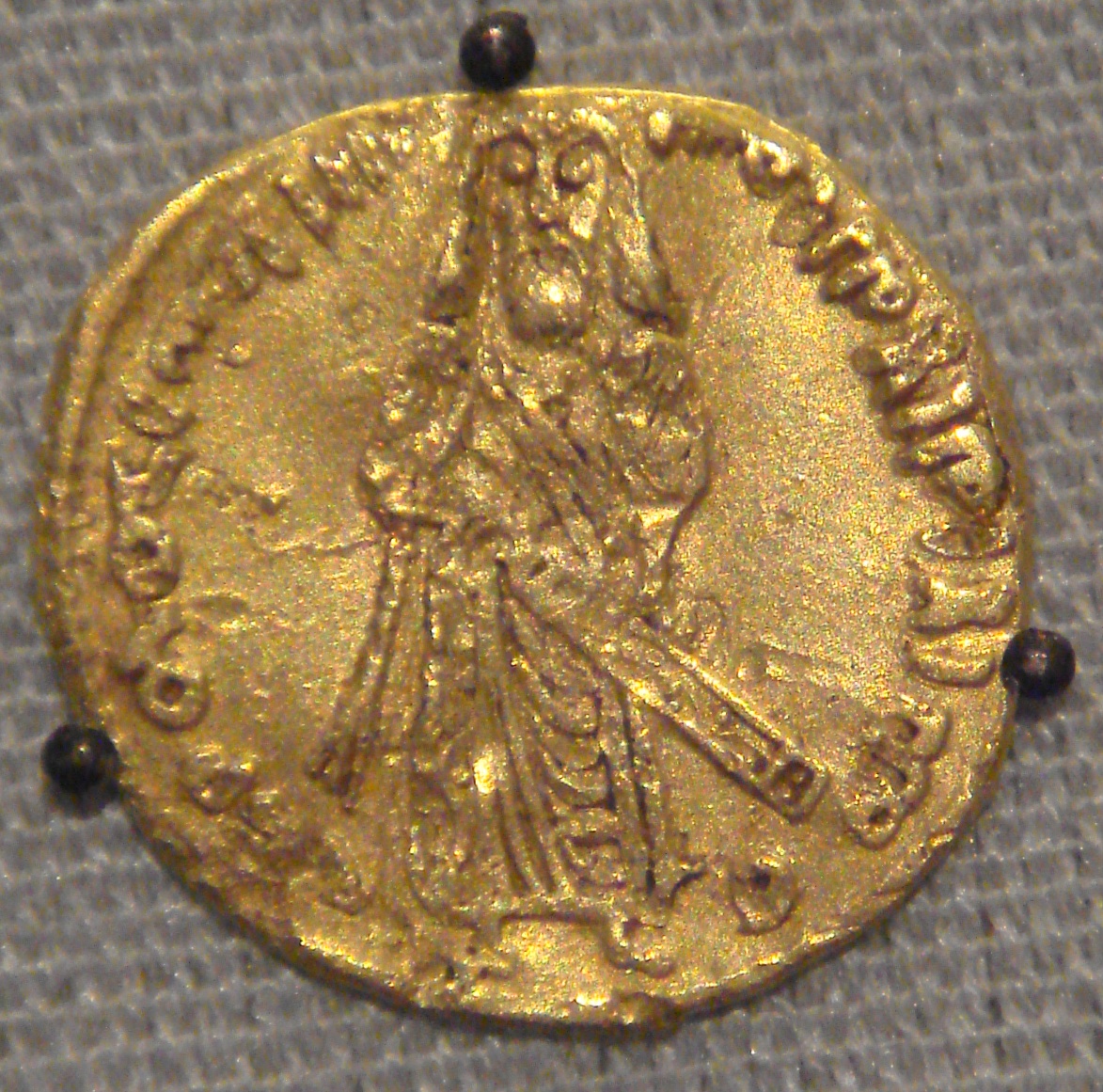 651 CE
Death of Yazdegerd III
The Sasanian empire ends. Arab-Sasanian drachms continue Khosrow II's types for another 50 years.
View era →- 696 CE
Abd al-Malik's coinage reform
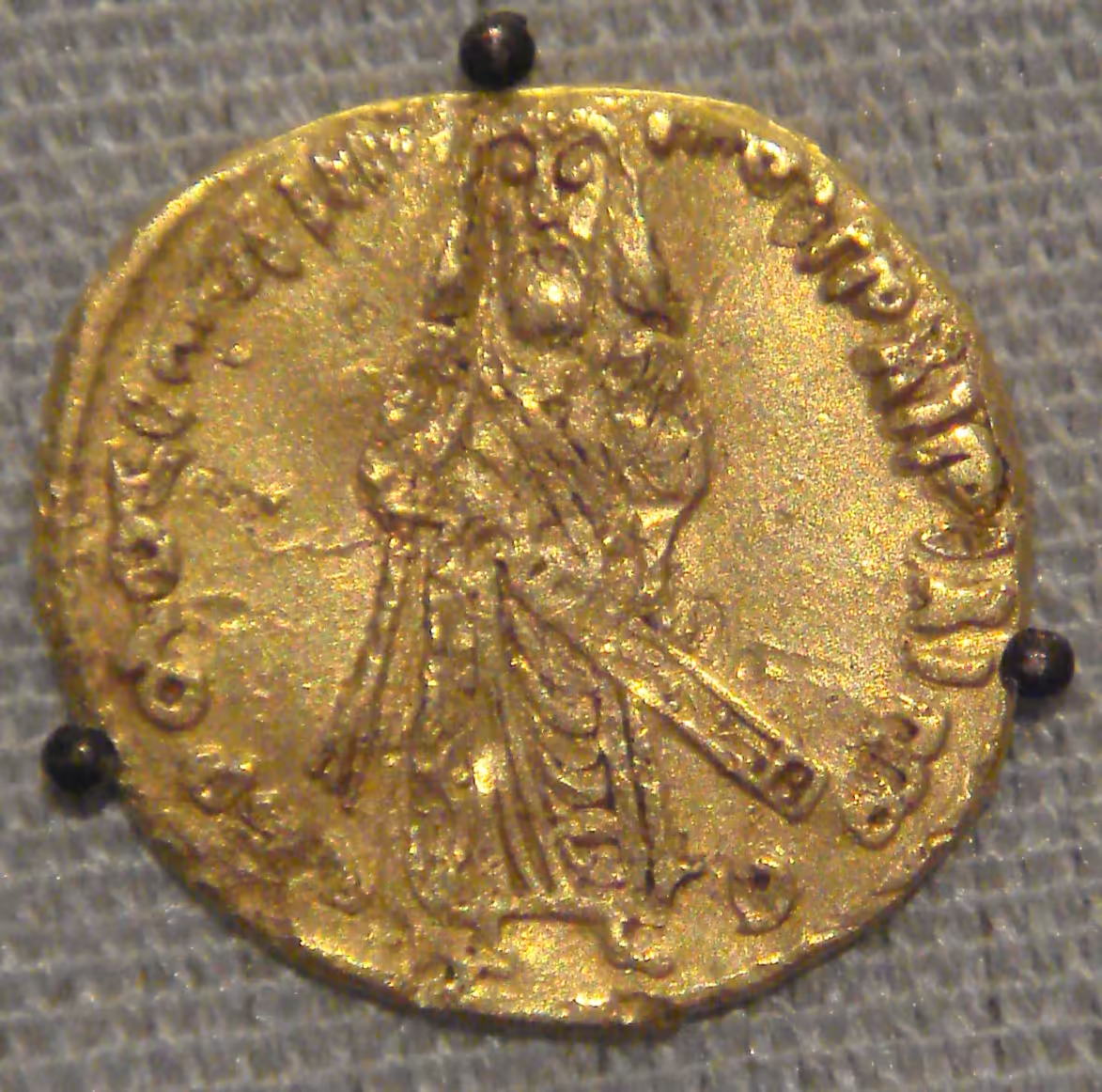
The Umayyad caliph replaces image-bearing coins with purely epigraphic dinar (~4.25 g) and dirham (~2.97 g).
- 874 CE
Samanid silver economy peaks
Nishapur, Bukhara and Samarqand pour out dirhams that reach Viking Russia.
- 1055 CE
Seljuq Turks enter Baghdad
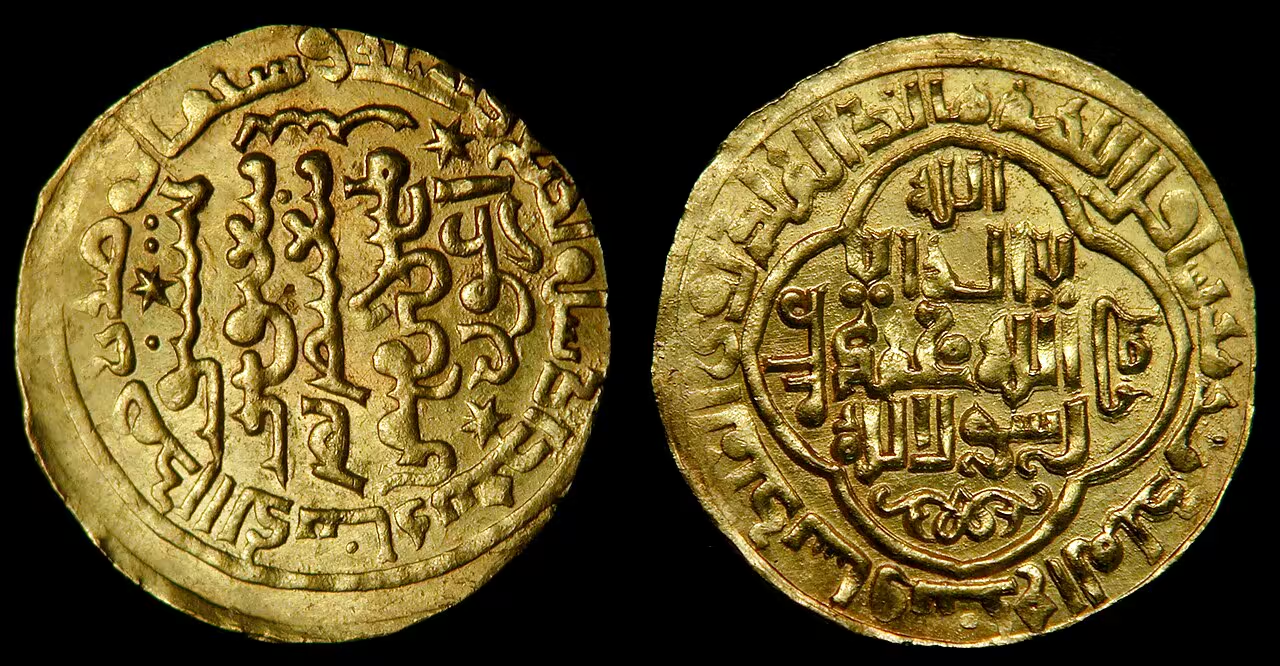
Seljuq gold dinars under Malik Shah dominate eastern Mediterranean trade.
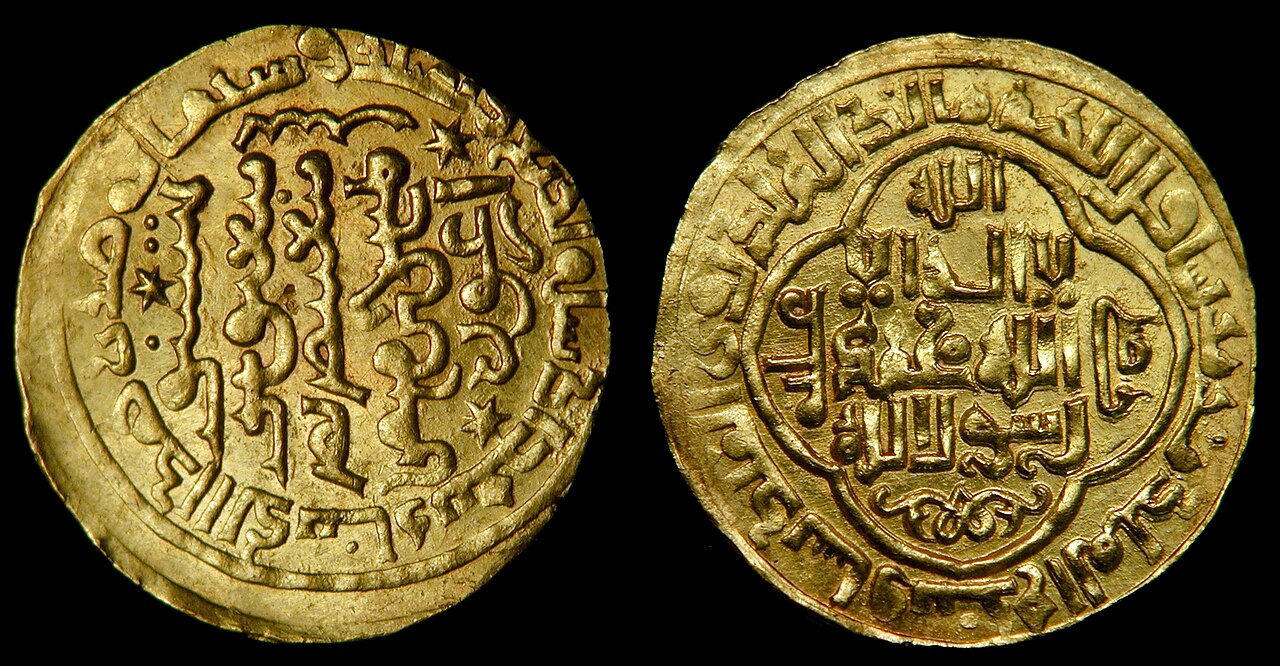 1295 CE
Ghazan Khan's Ilkhanate reform
Mongol coinage is unified across Iran with standardised silver dirhams.
View era →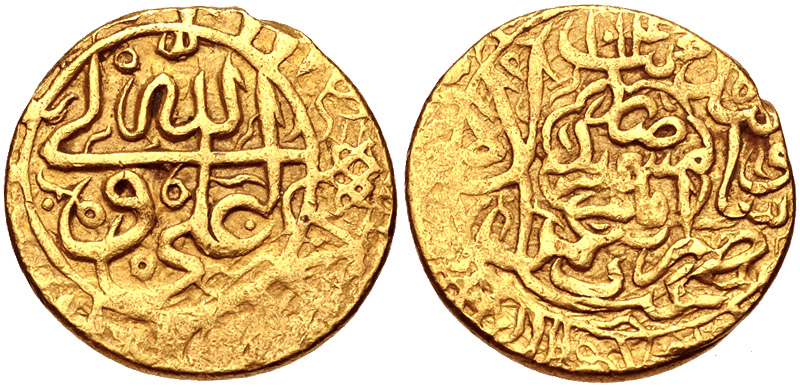 1501 CE
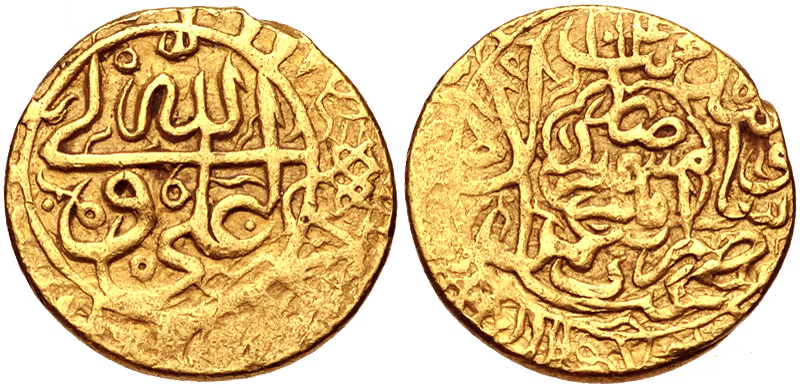
Shah Ismail proclaims the Safavid state
Tabriz issues silver shahis bearing the names of the Twelve Imams.
View era →- 1598 CE
Shah Abbas moves capital to Isfahan
The silver abbasi (~7.7 g) becomes Iran's main circulating coin for two centuries.
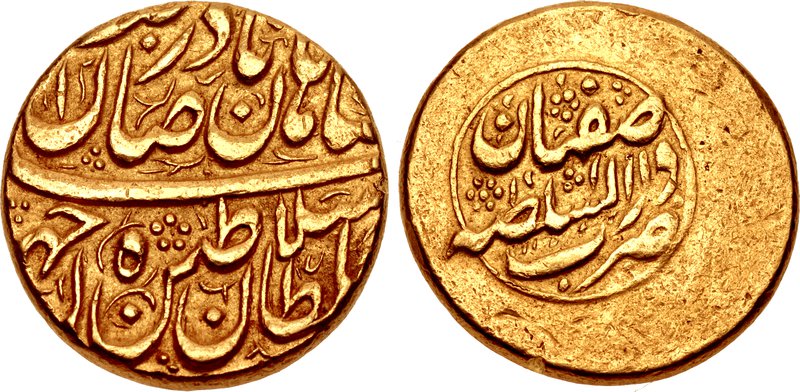 1739 CE
Nader Shah sacks Delhi
Mughal gold pours into Iranian mints; Nader's rupees are struck at Kabul and Mashhad.
View era →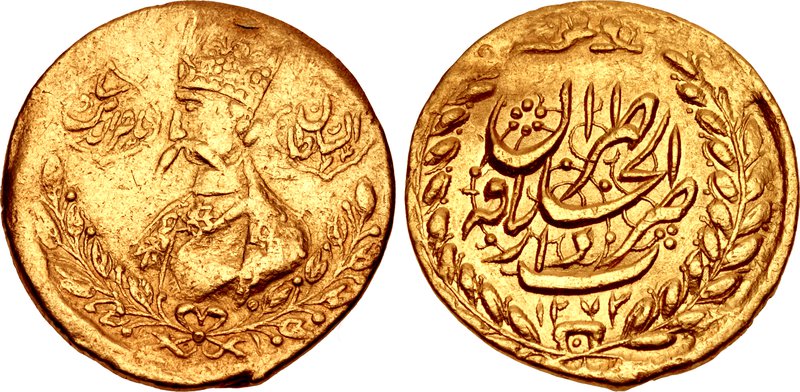 c. 1786 CE
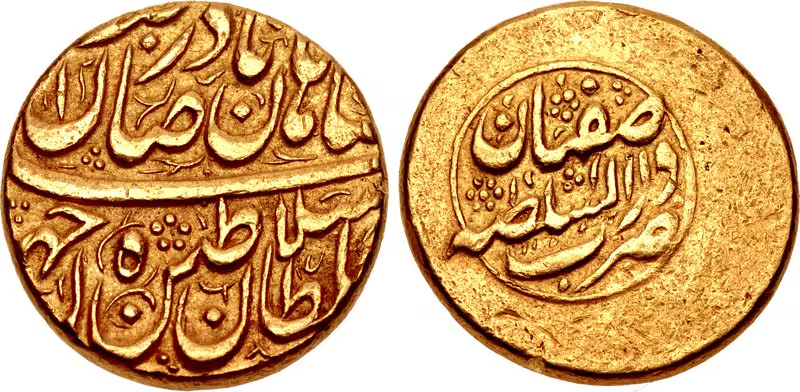
Tehran becomes the Qajar capital
Agha Mohammad Khan establishes the imperial mint in Tehran.
View era →- 1876 CE
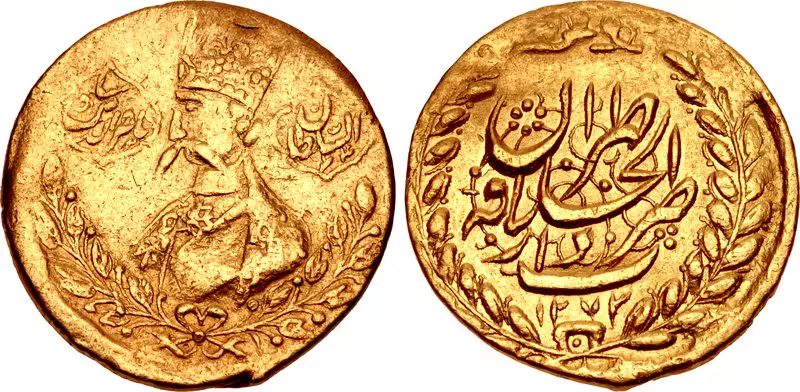
Machine-struck Qajar coinage
Nasir al-Din Shah introduces milled toman and qiran from British-built dies.
- 1906 CE
First Imperial Bank of Persia notes
Paper money, printed in London by Bradbury Wilkinson, enters circulation.
 1932 CE
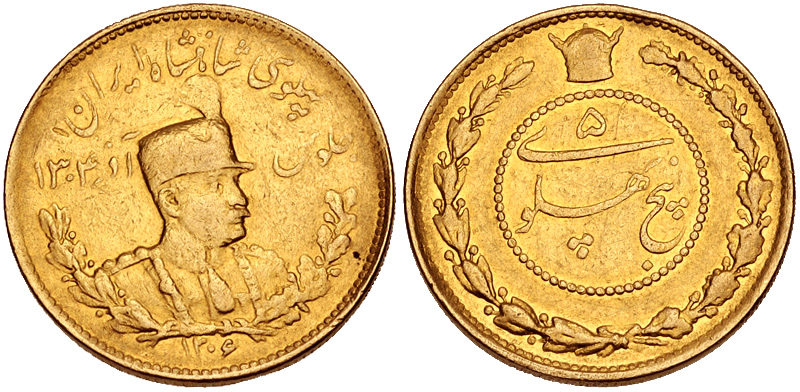
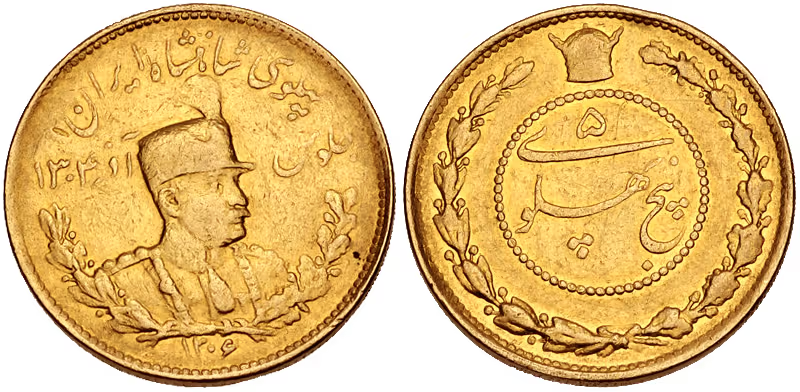
Rial replaces the qiran
Reza Shah's monetary reform creates the modern Iranian rial at parity with the qiran.
View era →- 1971 CE
2,500-year commemorative issues
Mohammad Reza Shah issues commemorative gold coins and banknotes for the Persepolis celebrations.
 1979 CE
Islamic Revolution
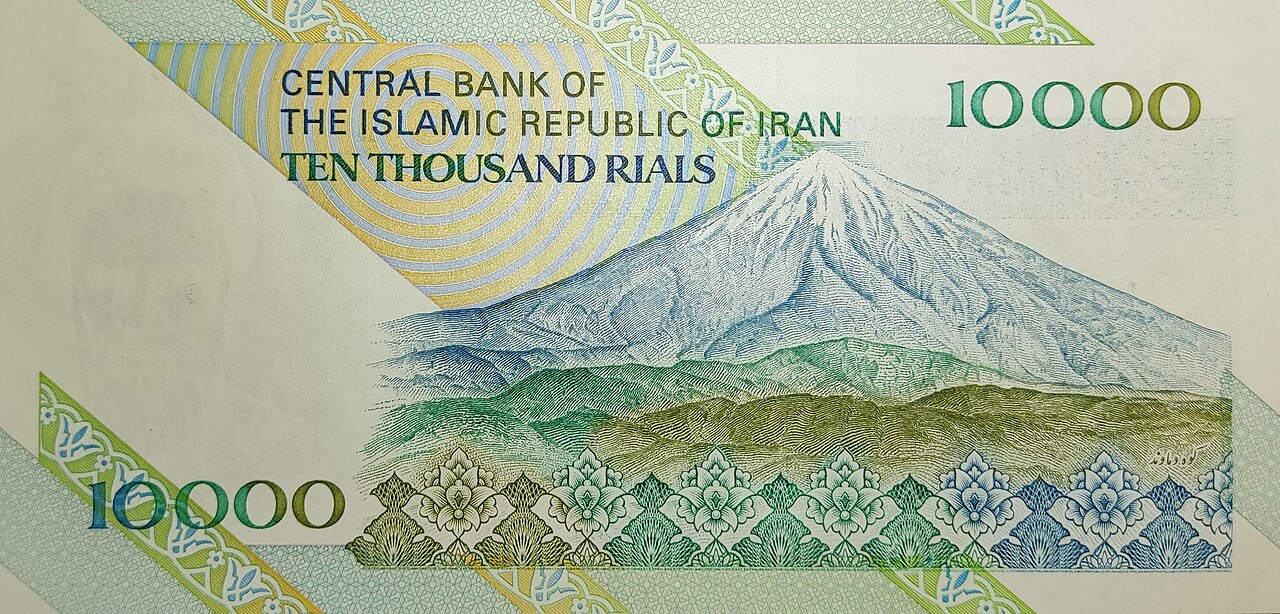
Bank Markazi reissues banknotes with Islamic Republic insignia, initially overprinting the existing Pahlavi notes.
View era →

Reading the long arc
Persian monetary history is exceptionally long and exceptionally well preserved. Twenty-six centuries separate the gold daric of Darius I from the polymer commemoratives of the Islamic Republic, and very few interruptions break the chain. Surviving coins from almost every decade of those twenty-six centuries can be held in the hand. The timeline above sketches the major turning points; the paragraphs below explain how the periods connect.
From bullion to coin (8th–6th centuries BCE)
For most of human history precious metal circulated by weight rather than by face value, and Iran was no exception. The Median and pre-Achaemenid Iranian plateau used cut silver (hacksilber) measured against a shekel weight, much like the contemporary Levant. True coinage — that is, lumps of precious metal of standardised weight stamped with a guarantee of value by a political authority — was a Lydian invention of the mid-7th century BCE, reaching the Iranian world when Cyrus the Great conquered Lydia around 546 BCE. For the first generation under Persian rule the existing Lydian electrum and bimetallic gold-silver coinages continued unchanged; only with Darius I's reform around 515 did a truly imperial Persian coinage emerge.
The bimetallic standard (515 BCE – 224 CE)
The Achaemenid gold daric (~8.4 g) and silver siglos (~5.6 g) circulated for almost two centuries with very little change to their archer-king type. Alexander's conquest of 330 introduced Greek-weight tetradrachms across Iran but did not displace the Achaemenid coinages overnight — double-darics were struck under Macedonian satrapal authority for at least a generation. Under the Seleucids the Attic tetradrachm became the dominant denomination across the plateau, struck at Antioch, Seleucia, Ecbatana and Susa. When the Parthian Arsacids broke away from Seleucid rule from 247 BCE onward they retained the Attic standard but introduced a distinctive iconography: the diademed king on the obverse, the seated archer-Arsaces on the reverse, with Greek (later Aramaic-script) legends.
The Sasanian centuries (224–651 CE)
The Sasanian dynasty's defeat of the last Parthian king at Hormizdagan in 224 CE began a four-century run of remarkably stable silver coinage. The thin, broad drachm reformed by Khosrow I around 530 CE became the most numerous surviving silver coin of late antiquity. Every drachm gives the king's name, the regnal year and the mint city in Pahlavi script — making Sasanian coinage one of the most precisely datable corpora in the ancient world. Sasanian silver remained the dominant currency of the Iranian plateau and the eastern Caliphate even after the Arab conquest: Arab-Sasanian governors of Fars and Sistan continued to strike drachms in Khosrow II's style, with Arabic marginal legends added, until the Umayyad reform of 696.
The Islamic millennium (651–1736)
Caliph Abd al-Malik's coinage reform of AH 77 (696/697 CE) abolished figurative imagery in favour of pure Arabic epigraphy. The resulting dinar (gold, ~4.25 g) and dirham (silver, ~2.97 g) set the visual standard for Islamic coinage from Spain to Central Asia for the next thousand years. Iranian dynasties — Tahirid, Saffarid, Samanid, Buyid, Ghaznavid, Seljuq, Khwarazmshah — followed the standard while adding their own names beside the caliph's. The Mongol Ilkhanate and Timurid empires brought Central Asian mints into the system and introduced the silver tanga, ancestor of the Indian rupee and the Tajik somoni. The Safavid revival (1501) added Twelver Shi'a religious formulae to the obverse, in elegant Nastaʿlīq script, and made the silver abbasi the dominant circulating coin of Iran for two centuries.
The modern transition (1736–1932)
The eighteenth and nineteenth centuries saw two great changes. First, the introduction of machine-struck coinage: Nasir al-Din Shah Qajar imported British minting equipment in the 1870s and produced Iran's first milled toman and qiran. Second, the introduction of paper money: the 1889 banking concession to the Imperial Bank of Persia produced the first Iranian banknotes, issued from 1890 and redeemable only at the issuing branch. The two innovations together replaced an essentially medieval monetary system with a recognisably modern one over a single generation.
The Pahlavi rial and the Islamic Republic (1932–present)
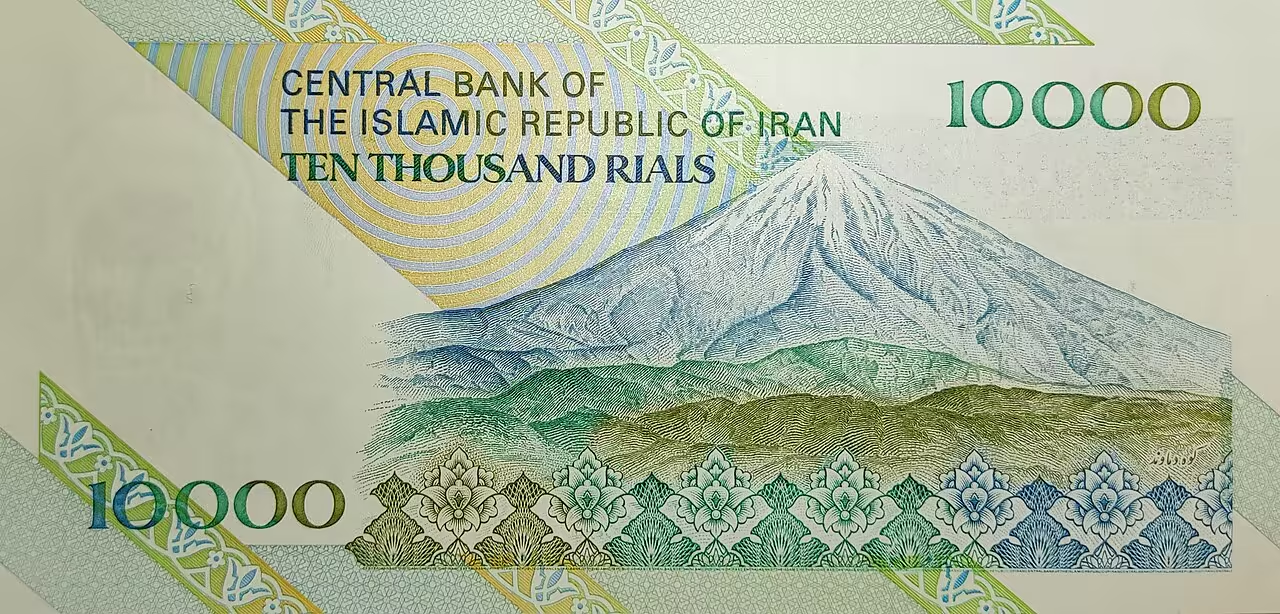
Reza Shah's monetary reform of 1932 abolished the qiran, introduced the rial, and transferred the note-issuing privilege from the Imperial Bank to Bank Melli Iran. Bank Markazi took over in 1961 and remains the central bank. Mohammad Reza Shah's reign saw the most ambitious modern Iranian coin and banknote programmes — the 1971 Persepolis commemoratives, the full Pahlavi gold series, and a complete set of rial banknotes from 5 to 10,000. After 1979 the Islamic Republic overprinted, then replaced, the Pahlavi notes; from 1992 the portrait of Ayatollah Khomeini has appeared on every regular banknote. The toman redenomination of 2020 — removing four zeros and renaming the rial as the toman — is the latest chapter in a story that began with the gold of Darius.