Humility in Gold: The Coinage of Karim Khan Zand from Shiraz and Khoy
An exploration of the Zand dynasty’s unique numismatic legacy, focusing on Karim Khan's rejection of the title of Shah in favor of 'Vakil al-Ra'aya' and its impact on Persian monetary history.
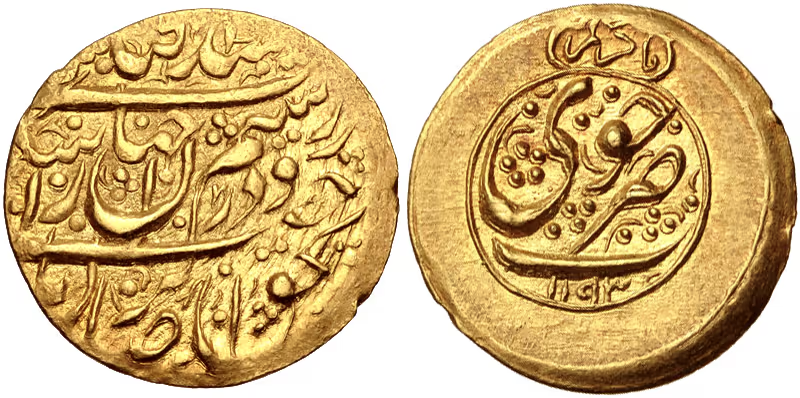
In the chaotic vacuum left by the collapse of the Afsharid Empire and the assassination of Nadir Shah in 1747, the Iranian plateau descended into a fractured landscape of competing warlords and tribal confederations. Amidst the carnage of the mid-eighteenth century, a leader of the Zand tribe, Karim Khan, emerged not merely as a military victor, but as a restorer of civil order and cultural refinement. Unlike the conquerors who preceded him, Karim Khan famously eschewed the title of Shah, preferring instead the appellation Vakil al-Ra’aya, or 'Deputy of the Subjects.' This ideological stance, rooted in a form of populism and traditional Persian modesty, fundamentally altered the iconography and messaging of the sovereign’s most public medium: the currency.
The coinage of the Zand period serves as a tangible record of this transitional era, reflecting a shift from the grandiose, militaristic inscriptions of Nadir Shah to a more localized, pious, and aesthetically balanced style. While the mints of Shiraz and Khoy provide two distinct geographical views of Zand authority—one as the heart of the empire and the other as a strategic northern outpost—both share the common thread of Zand numismatic restraint. Understanding these coins requires an appreciation of the delicate balance Karim Khan struck between maintaining the legitimacy of the Safavid lineage and asserting his own practical governance during one of Iran's most pivotal centuries.
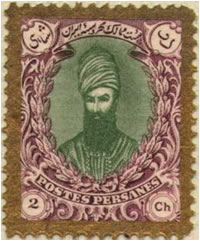
The Rise of the Vakil and the Monetary Context
Following the death of Nadir Shah, the Iranian economy was in a state of exhaustion. The heavy taxation required to fund the Afsharid campaigns in India and the Caucasus had drained the peasantry, while the subsequent civil wars disrupted trade routes and mineral extraction. When Karim Khan Zand finally consolidated power in the 1750s, his primary objective was the stabilization of the realm. This stabilization began with the establishment of Shiraz as the national capital, transforming the city into a center of architectural and artistic excellence.
In terms of monetary policy, the Zand period saw a return to the weight standards that had been established late in the Safavid era, though with some modifications. Unlike the Afsharids, who had experimented with large-format silver coins like the rupee, the Zands favored the traditional Abassi and the Shahi. However, the truly remarkable aspect of Karim Khan’s coinage was the absence of his own name. To emphasize his role as a humble deputy rather than a divinely appointed monarch, he typically featured poetic couplets or religious invocations on the obverse. This practice was a stark departure from centuries of Persian tradition where the ruler’s name was the central validator of the coin's value.
Shiraz: The Mint of the Dar al-Elm
As the seat of power, the Shiraz mint was the most prolific and influential under the Zands. Coins struck here often bore the epithet Dar al-Elm (Abode of Knowledge). The artistry of Shiraz coinage is noted for its elegant, flowing Nasta’liq calligraphy, which many collectors consider the pinnacle of Persian script on metal. The silver issues from Shiraz were the backbone of the domestic economy, but it is the gold Mohur (often referred to as the gold toman in later contexts) that truly captures the era's sophistication.
Gold coins of Karim Khan were not produced in the massive quantities seen under the Safavids or the later Qajars. Instead, they served as prestigious markers of statehood and were often used for high-level trade or ceremonial gifts during the Persian New Year, Nowruz. The inscriptions on these gold pieces frequently evoked the protection of the Twelfth Imam, with phrases such as Ya Sahib al-Zaman (O Lord of the Time). This religious framing served a dual purpose: it validated the currency through divine authority and signaled the ruler's commitment to Twelver Shi'ism without requiring his individual name to be struck in gold.
The Weights and Measures of Shiraz
The Shiraz mint adhered to a strict aesthetic and metrological standard. While minor fluctuations occurred during the early years of the civil war, once Karim Khan was firmly established, the consistency of the silver issues became a hallmark of his administration. This reliability helped revive the bazaar economy of Fars and facilitated maritime trade through the Persian Gulf.
| Denomination | Typical Metal | Weight Standard (Approx.) | Common Mint Mark |
|---|---|---|---|
| Mohur | Gold | 11.0 grams | Shiraz (Dar al-Elm) |
| Abassi | Silver | 4.6 grams | Isfahan (Dar al-Saltaneh) |
| Shahi | Silver | 1.15 grams | Tabriz (Dar al-Saltaneh) |
| Kasbeki / Fals | Copper | Varies by city | Various local motifs |
Khoy: The Gateway to the North
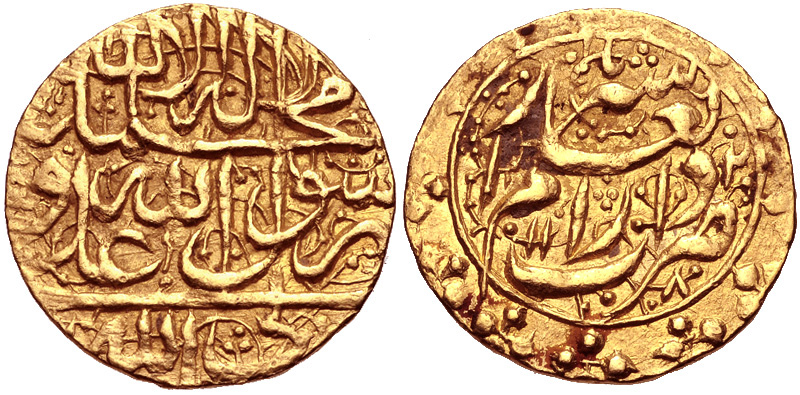
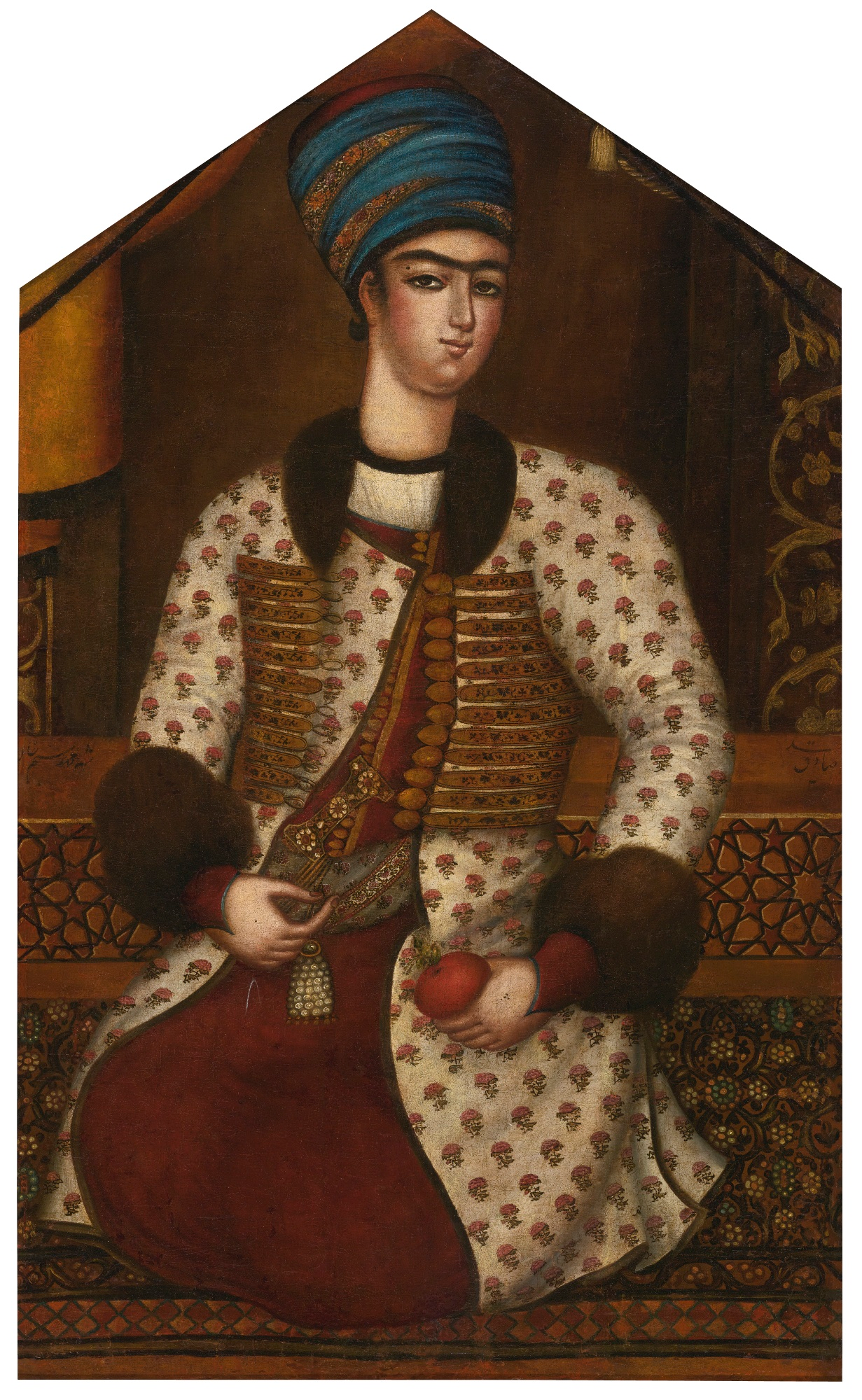
While Shiraz represented the internal stability of the Zand state, the mint at Khoy, located in the northwest, tells a different story. Khoy was a vital crossroads for trade with the Ottoman Empire and the Russian sphere of influence. Because of its strategic location, the coins minted in Khoy often circulated alongside foreign currencies, necessitating a high degree of purity and weight accuracy to remain competitive in international markets.
Coins from Khoy during the Karim Khan era are characterized by a slightly more utilitarian design compared to the floral elegance of the Shiraz issues. However, they maintain the theocratic orientation of the Zand state. The use of the Sikka-ye Ya Sahib al-Zaman became standard here as well. Interestingly, because the northern territories were often contested by local tribal khans who paid nominal fealty to Shiraz, the presence of Karim Khan's mint in Khoy was a crucial political statement. It signaled that even the periphery of the Iranian plateau was under the 'protection' of the Vakil.
- Initial consolidation of the northern mints under Zand governors.
- Standardization of the Khoy silver weight to match the Shiraz central standard.
- Increased production during the 1760s to accommodate growing trade with the Ottoman city of Van.
- Gradual transition of the mint to local control following Karim Khan's death in 1779.
Epithets and Calligraphy: The Visual Language
One of the most distinctive features of Zand coinage is the specific poetic couplet used on silver and gold. Usually, the obverse would feature a verse such as: Shod aftab o mah, zar o sim dar jahan / Az sekke-ye Emam-e Haqq, Saheb-az-Zaman (The sun and moon became gold and silver in the world / From the coin of the rightful Imam, the Lord of the Age).
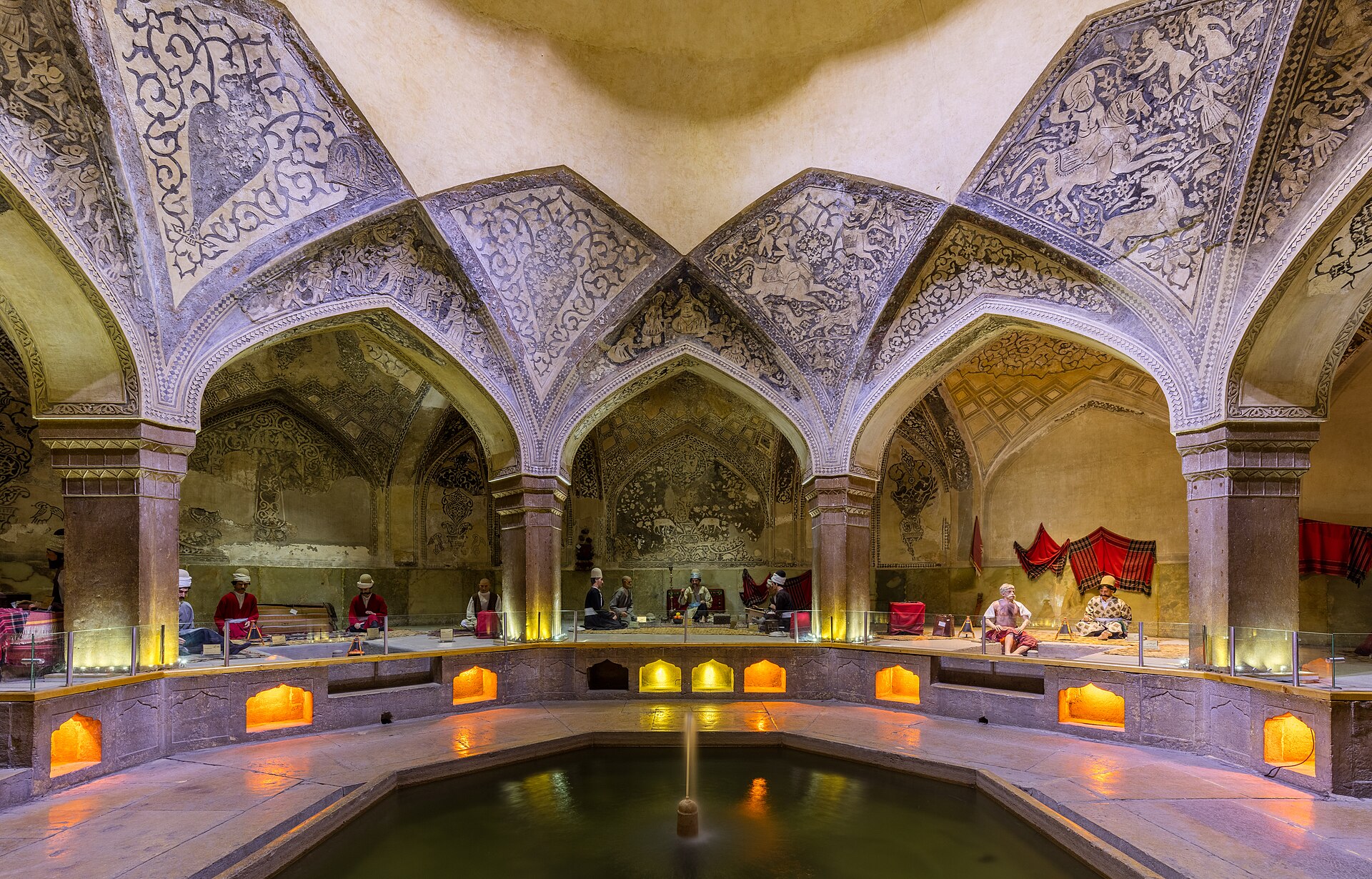
This couplet is essential for identifying Zand coins. It perfectly encapsulates the humility of Karim Khan; by crediting the Imam with the existence of the money itself, the Vakil positioned himself as a mere steward of a divine economy. The calligraphy itself is often arranged in a dense, balanced composition known as Suls or Nasta’liq, depending on the specific engraver at the mint. The background of the coin planchet is rarely left empty, often filled with small floral scrolls or 'cloud' patterns (khata’i) that mirror the tile work found in the Vakil Mosque or the Arg of Karim Khan in Shiraz.
'Ya Karim' is another common inscription found on Zand coins. While it is one of the 99 names of God (The Generous), it also served as a clever double-entendre (pun) on Karim Khan's name, allowing him to be recognized by his subjects without technically breaking his vow of avoiding the royal title on coinage.
The Copper Coinage: Local Identity
While gold and silver were centralized and consistent, the copper Fals (or Kasbeki) provides a window into the local life of Zand-era Iran. These coins were intended for daily local transactions—buying bread, paying for public baths, or trading in the local vegetable markets. Unlike the precious metals, copper coins frequently featured animal motifs: lions, deer, peacocks, or even mythical creatures like the Simurgh.
In Shiraz, the copper coins often depicted a lion and sun or floral motifs that echoed the decorative arts of the Fars province. In Khoy, the designs might reflect more Caucasian or Anatolian artistic influences. These coins are often found in a worn state, indicating their heavy use in the everyday life of the Ra'aya (the subjects) whom Karim Khan sought to protect. They represent the bottom tier of a highly organized monetary system that linked the remote villages to the imperial center.
- Animal Imagery: Symbolized strength, grace, or local fauna.
- Mint Dates: Usually found at the bottom of the reverse, helping historians track the duration of Zand influence in specific provinces.
- Regional Variety: Each city had its own distinct style for copper, unlike the uniform silver and gold.
Conclusion: The Legacy of a Modest Mint
The coinage of Karim Khan Zand remains a unique anomaly in the long history of Iranian numismatics. It was a period where the ego of the ruler was purposefully sublimated in favor of religious devotion and civil stability. By choosing to label himself a 'Vakil' rather than a 'Shah,' and by using his coins to honor the Twelfth Imam rather than his own lineage, Karim Khan created a fiscal identity that was both pious and practical.
The coins of Shiraz and Khoy stand as monuments to this philosophy. They remind us that the value of a currency is derived not just from the weight of its metal, but from the trust and peace it represents. When one holds a Zand Mohur or Abassi today, they are holding a piece of an era that briefly prioritized the welfare of the subjects over the vanity of the crown. As the Zand dynasty eventually gave way to the Qajars, the tradition of the anonymous, humble coin faded, making these 18th-century issues prized treasures for those who study the art of the Persian treasury.