In short
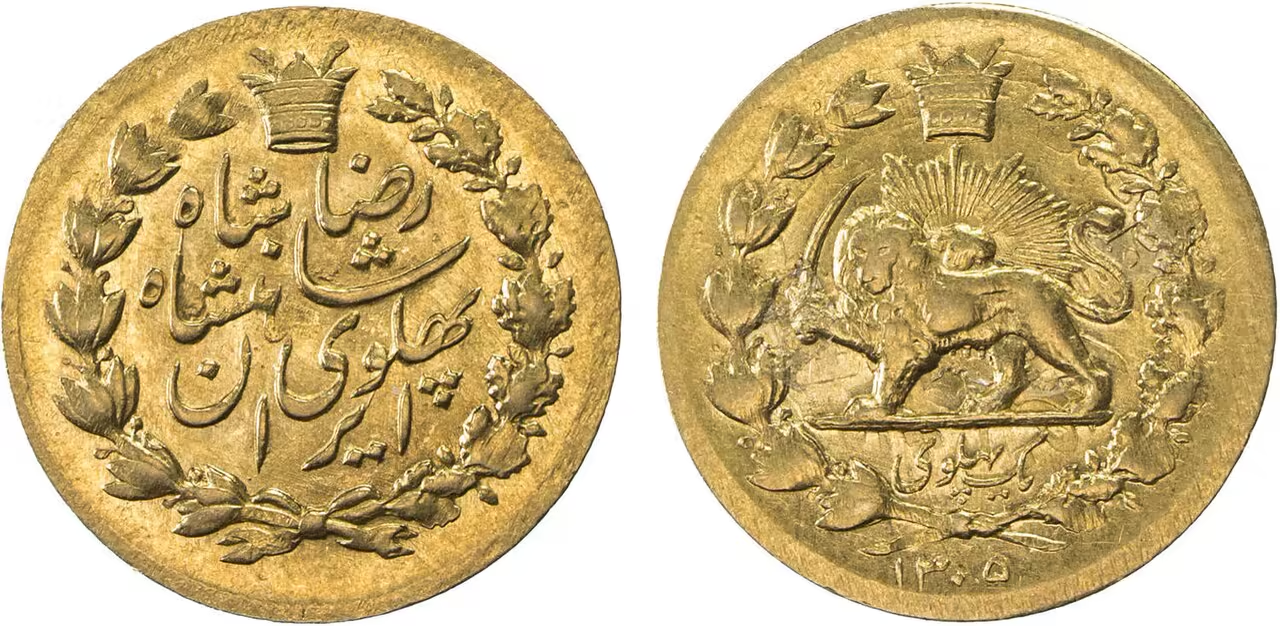
Pahlavi coins are the machine-struck coinage of Iran under Reza Shah and Mohammad Reza Shah (1925–1979): silver and later cupronickel rials, plus the gold Pahlavi coin of 8.136 g that is still traded in Tehran as a bullion instrument.
The gold Pahlavi
The gold Pahlavi (سکه پهلوی) was introduced in 1932 at 8.136 g of 0.900 gold — 7.32 g of fine gold, the same standard as the British sovereign it was designed to compete with. Half and quarter pieces followed, and the type continued after 1979 as the Bahar-e Azadi with the same weight.
Because the standard never changed, the coin functions as a savings instrument in Iran: prices are quoted daily and full, half and quarter pieces trade close to melt plus a premium.
Circulating coinage
Reza Shah's reform of 1932 replaced the qiran with the rial at 100 dinars. Early rials are silver, with the Pahlavi crown and lion-and-sun; from the 1950s cupronickel takes over and the silver disappears from circulation.
Commemoratives are a substantial sub-series: the 2,500-year celebration of the Persian Empire in 1971 and the FAO issues are the most frequently collected.
Reading the dates
Most Pahlavi coins use the Solar Hijri calendar: add 621 (or 622, depending on the month) to convert to CE, so SH 1350 is 1971 CE. Between 1976 and 1978 a short-lived imperial era was used, counting from the accession of Cyrus, which produces four-digit dates in the 2500s — those are Pahlavi coins, not ancient ones.