How a Persian mint worked
Before the 19th century every Persian coin was struck by hand. A die engraver (hakkak) cut the design in reverse, in mirror image, into the face of a hardened steel or iron die — one die for the obverse, one for the reverse. A blank disk of metal (a flan), cut and weighed to the correct standard, was placed between the two dies, with the reverse die usually fixed in an anvil and the obverse die held in the hand or a punch. A single blow from a heavy hammer forced the metal into both engraved faces at once, producing the coin. Because the process was manual, dies wear, crack, and are frequently re-cut or replaced mid-issue — which is why coins of the same ruler, mint and year can show many small die varieties, a central subject of specialist die studies (e.g. the Sylloge Nummorum Sasanidarum for Sasanian drachms).
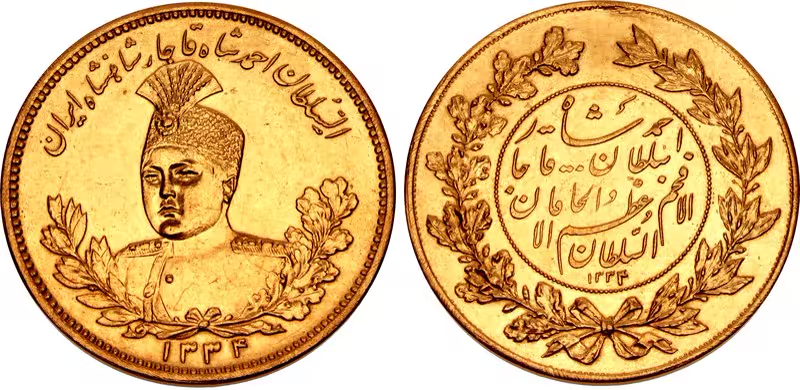
Hammered striking remained universal in Iran until the Qajar period. Nasir al-Din Shah imported screw presses and mechanical coining equipment from Britain in the 1870s, and the Tehran mint became the country's first facility for milled (machine-struck) coinage, with dies of far greater precision and coins of near-identical diameter and thickness. Provincial mints, unable to afford this equipment, gradually closed, concentrating national coin production in the capital for the first time in Persian history.
A further distinction runs through the whole record: royal versus provincial issues. Royal or "capital" mints — Persepolis under the Achaemenids, Ctesiphon under the Sasanians, Isfahan under the Safavids, Tehran under the Qajars and Pahlavis — struck in the name and often under the direct supervision of the sovereign, typically with the finest dies and tightest weight control. Provincial mints operated under a governor's or local dynast's authority, sometimes striking in the sovereign's name and sometimes, in moments of weak central control, in their own. The layered mint marks left behind by centuries of this system are what let numismatists reconstruct, city by city and year by year, the political geography of the Persian world.
Reading the mint signature
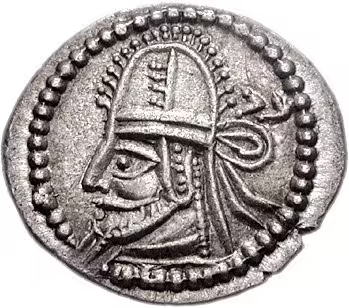
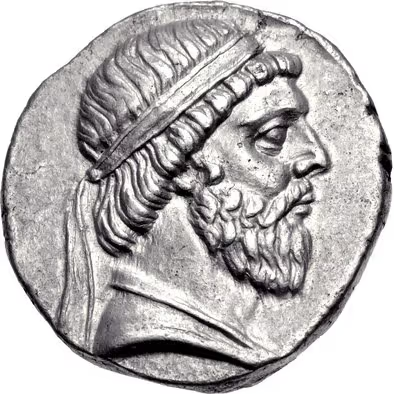
The mint signature on an Iranian coin is the most compressed single document in monetary history: one to four characters that name the city — and sometimes the workshop — where the piece was struck. Learning to read these marks is the key to most Iranian numismatic collections. Achaemenid coinage carries none — Sardis darics and sigloi are unsigned, and attribution rests on type, weight and archaeological find-spot. Parthian silver tetradrachms from Seleucia carry Seleucid-era dates but rarely name the city; drachms carry a workshop monogram under the seated archer, with Ecbatana (HMD), Rhagae (RY) and Merv (MY) among the best-attested.
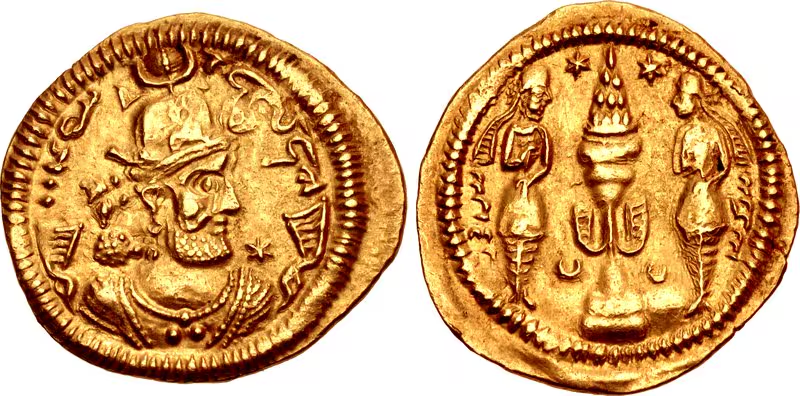
The decisive innovation came under the Sasanians. Khosrow I's reform of the 530s codified a layout in which every thin silver drachm carries three pieces of information around the fire-altar reverse: the abbreviated Pahlavi mint name to the left, the regnal year in numerals to the right, and the king's name and titulature on the obverse. Because of this, the drachms of Khosrow II alone yield a map of imperial economic activity covering roughly thirty cities, from Merv to Ctesiphon to Kerman.
The Islamic centuries
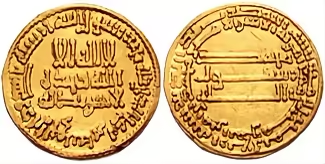
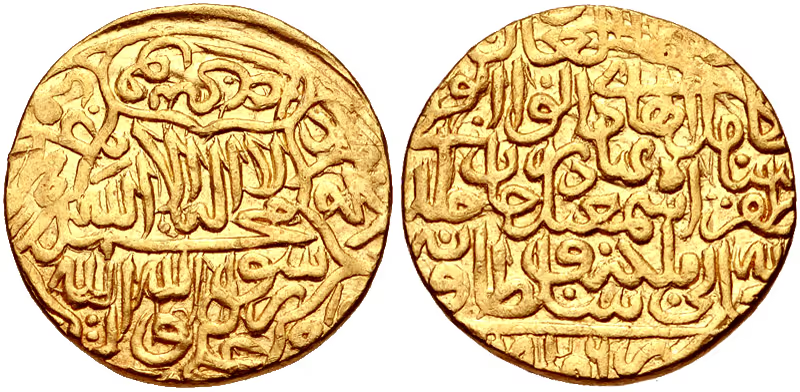
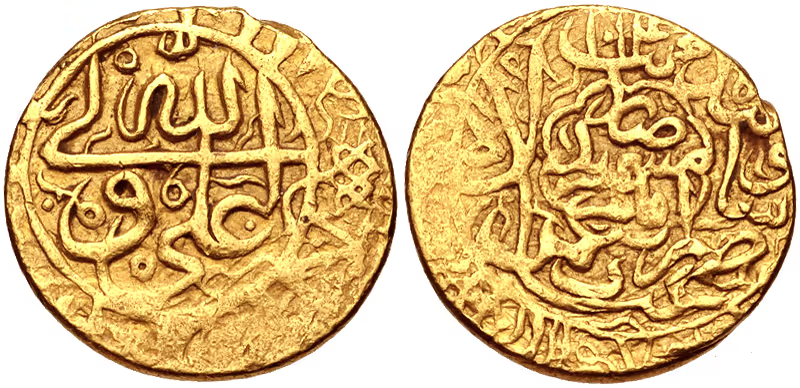
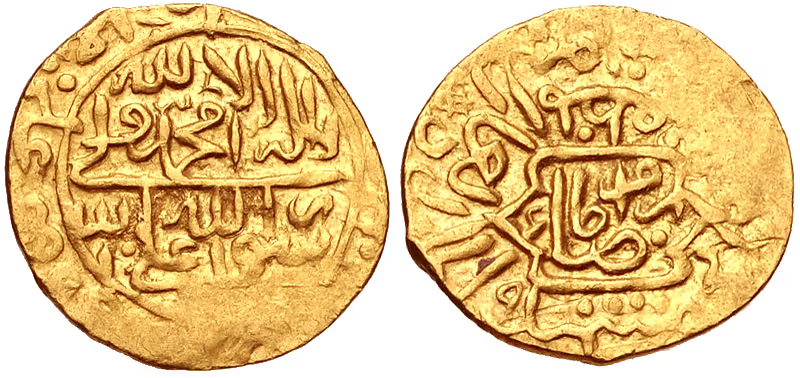
Abd al-Malik's reform of 77 AH wrote the mint city out openly in Arabic: "Duriba hadha'l-dirham bi'l-Kufa sanata sab' wa sab'in" — "this dirham was struck at Kufa in the year seventy-seven". This pattern was kept by every Iranian Islamic dynasty: Tahirids, Samanids, Buyids, Seljuqs, Khwarazmshahs, Ilkhanids, Safavids, Afsharids, Zands, Qajars. The consequence is that Iranian Islamic coins are almost always precisely attributable — the city and the AH year are on the coin itself, in legible epigraphic Kufic, naskh or nastaliq.
Under Nasir al-Din Shah Qajar, the mint signature underwent a technological transformation. With the arrival of British machine-struck dies from Birmingham in 1290 AH, the Tehran mint became the centre of national coin production and the provincial mints closed one by one. On machine-struck tomans the legend reads simply zarb-e Tehran ("struck at Tehran") or just Tehran, identical on every coin. After 1932 every Iranian rial coin has been struck only at Tehran — twenty-five centuries of mint geography compressed into a single building.
Where to start
To read an unattributed coin, check fabric and weight first — a thin silver disk of about 4 g is very likely Sasanian or early Islamic. Then check the script: Pahlavi, Kufic or naskh. Finally look in the margin for a city name. Diler's Islamic Mints and Stephen Album's Checklist of Islamic Coins are the two indispensable pocket references and make reading these signatures considerably easier than it appears at first glance.