← All eras
651 – 1258 CE · Caliphate provinces of Iran

Arab-Sasanian & Early Islamic

Arab governors continued striking Sasanian-style drachms with added Arabic Kufic legends (bismillah). Abd al-Malik's reform (696/77 AH) introduced epigraphic-only Islamic coinage — the silver dirham and gold dinar.

Historical note

Arab-Sasanian drachms (651–700 CE) bear governors' names like Ziyad ibn Abi Sufyan and Ubayd Allah ibn Ziyad in Pahlavi, with bismillah in Arabic margin.

Reformed coinage under the Umayyads and Abbasids carried only Qur'anic inscriptions — no images — a rule observed for centuries.

Iranian Buyid, Samanid, Saffarid, Ghaznavid, Seljuq and Ilkhanid issues followed the dinar/dirham/fals system with regional variations.

The pieces

Catalogue · 14 entries

Plate 01

Arab-Sasanian Drachm

Ubayd Allah ibn Ziyad

Date
673–683 CE
Metal
Silver
Weight
~4.0 g
Mint
Basra / Bishapur

ObverseSasanian bust of Khosrow II type + Arabic bismillah in margin.

ReverseFire altar + Arabic governor's name.

Transitional issue — Sasanian iconography continued for 50 years after the conquest.

Source · Commons – Arab-Sasanian dirham
Plate 02

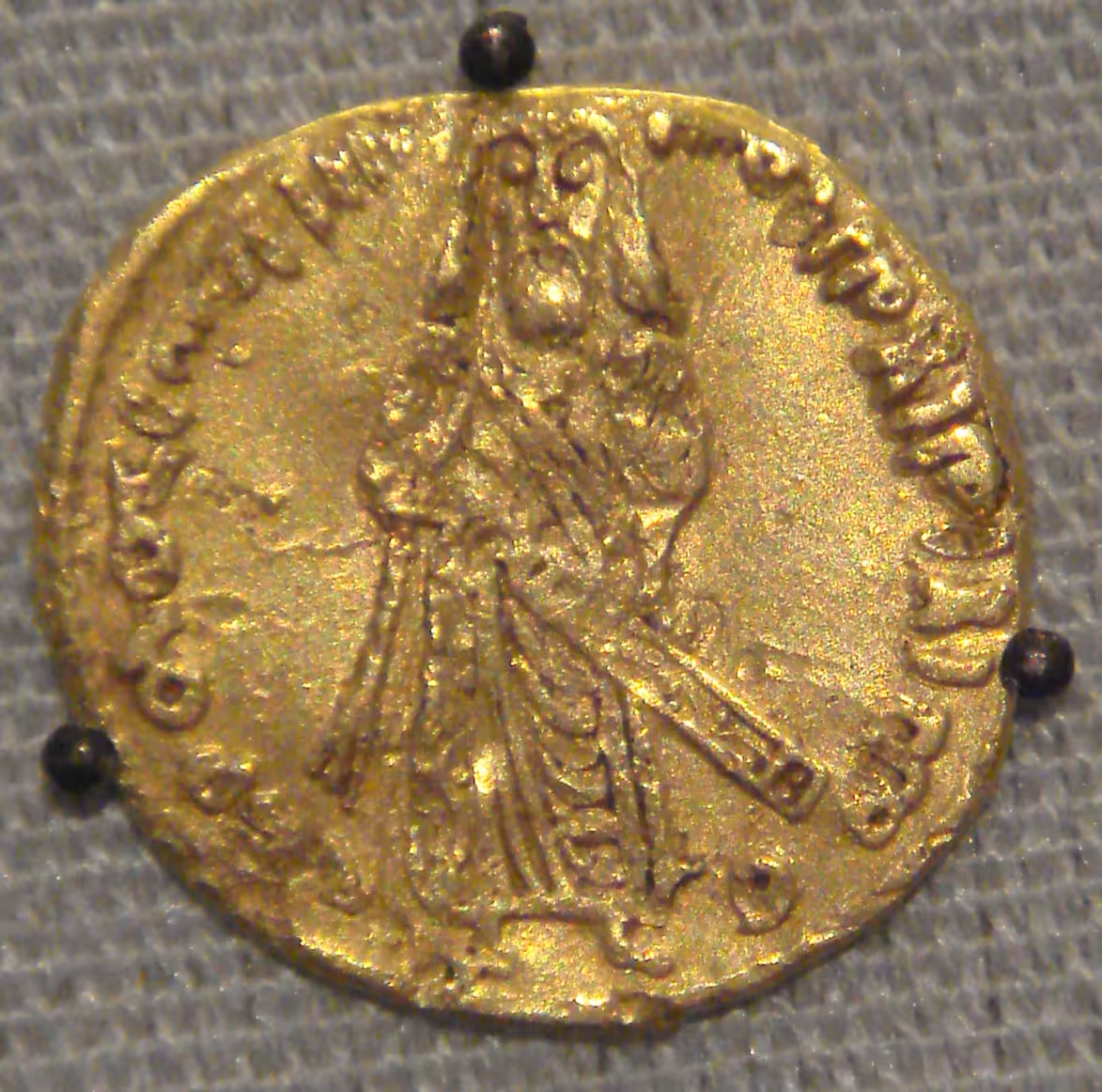
Umayyad Gold Dinar

Abd al-Malik (post-reform)

Date
77 AH / 696 CE
Metal
Gold
Weight
~4.25 g
Mint
Damascus

ObverseShahada in centre; mint and date in margin.

ReverseQur'an 112 (al-Ikhlas).

First purely epigraphic Islamic coin — a revolution in monetary art.

Source · Commons – First Umayyad gold dinar
Plate 03

Samanid Gold Dinar (Nishapur)

Abd al-Malik I (Samanid)

Date
955–956 CE
Metal
Gold
Weight
~4.0 g
Mint
Nishapur

ObverseShahada, ruler's name, caliph's name.

ReverseQur'anic verse, mint and date.

Samanid silver dirhams flooded Viking-age trade; vast hoards found from Russia to Sweden.

Source · Commons – Samanid gold coin
Plate 04

Ghaznavid Gold Dinar

Mas'ud III (Ghaznavid)

Date
1099–1115 CE
Metal
Gold
Weight
~4.0 g
Mint
Ghazna

ObverseShahada + sultan's titles.

ReverseCaliph's name in Kufic.

Ghaznavid Indian campaigns funded vast gold issues from Mahmud onward.

Source · Commons – Mas'ud III Gold Dinar
Plate 05

Great Seljuq Gold Dinar

Malik-Shah I

Date
1072–1092 CE
Metal
Gold
Weight
~3.8 g
Mint
Isfahan, Nishapur

ObverseShahada and sultan's titles.

ReverseAbbasid caliph al-Muqtadi.

Issued across a vast empire from Anatolia to Transoxiana.

Source · Commons – Malik Shah dinar
Plate 06

Ilkhanid-era Silver Dirham

Citing Ghazan Khan as overlord

Date
1296–1304 CE
Metal
Silver
Weight
~2.5 g
Mint
Kerman (Qutlughkhanid)

ObverseShahada in square frame (post-conversion to Islam).

ReverseGhazan's titles in Arabic.

Reformed coinage after Ghazan's conversion; bilingual issues.

Source · Commons – Ghazan-era dirham
Plate 07

Tahirid Silver Dirham

Tahir ibn Husayn

Date
821–822 CE (AH 206)
Metal
Silver
Weight
~2.9 g
Mint
al-Muhammadiya (Ray)

ObverseShahada with caliph al-Ma'mun named.

ReverseTahirid governor's name and mint.

Tahir founded the first quasi-independent Iranian Islamic dynasty in Khorasan (821–873), nominally loyal to the Abbasid caliph.

Source · Commons – Tahir ibn Husayn dirham
Plate 08

Saffarid Silver Dirham

Ya'qub ibn al-Layth al-Saffar

Date
861–879 CE
Metal
Silver
Weight
~3.0 g
Mint
Sistan / Zaranj

ObverseShahada in Kufic.

ReverseCaliph's name with Ya'qub's titles in margin.

The 'Coppersmith' rose from a militia leader in Sistan to ruling Iran from Fars to Khorasan — founder of the Saffarid dynasty and a hero of Iranian self-rule against the Abbasids.

Source · Commons – Ya'qub al-Layth dirham
Plate 09

Buyid Silver Dirham

'Adud al-Dawla (Buyid)

Date
AH 372 (982–983 CE)
Metal
Silver
Weight
~3.0 g
Mint
Basra

ObverseShahada with Abbasid caliph al-Ta'i named.

Reverse'Adud al-Dawla's titles, including 'Shahanshah' — a revival of the pre-Islamic Persian title.

The Buyids (934–1062) controlled the caliph in Baghdad while openly using Persian royal titulature on their coinage — a deliberate Iranian revival.

Source · Commons – Adud al-Dawla, Basra
Plate 10

Ilkhanid Gold Dinar of Arghun

Arghun Khan (Ilkhanid)

Date
AH 684 / 1285–1286 CE
Metal
Gold
Weight
~4.4 g
Mint
Baghdad

ObverseArabic legend with Mongol tamgha.

ReverseUighur-script titles of the Great Khan.

Bilingual Arabic-Uighur issue from the Mongol Ilkhanate of Iran, before Ghazan's conversion to Islam.

Source · Commons – Arghun gold dinar, Baghdad
Plate 11

Abbasid Gold Dinar of Harun al-Rashid

Caliph Harun al-Rashid

Date
AH 184 / 800 CE
Metal
Gold
Weight
~4.2 g
Mint
No mint name (likely Madinat al-Salam / Baghdad)

ObverseShahada in three lines; marginal legend with Qur'an 9:33 and AH date.

ReverseContinuation of Qur'anic legend, with caliph's name and title.

Struck at the height of the Abbasid Caliphate's prestige under the patron of the 'Thousand and One Nights' court. Abbasid gold dinars circulated as the dominant trade coin from al-Andalus to Sogdia, and the standard was rigorously maintained for over two centuries.

Source · Commons – Harun al-Rashid gold dinar 184 AH
Plate 12

Tabaristan Hemidrachm (Abbasid Era)

Issued under Caliph al-Mahdi

Date
AH 158–169 / 775–785 CE
Metal
Silver
Weight
~2.0 g
Mint
Tabaristan

ObverseStylised Sasanian-style bust derived from Khosrow II; Pahlavi legend.

ReverseFire altar with attendants; Arabic governor's name in margin; Tabari (post-Yazdgerd) era date.

Long after the Arab conquest the Caspian province of Tabaristan retained semi-autonomous local dynasties (Dabuyids, then Abbasid governors) who continued striking Sasanian-style half-drachms with Pahlavi script — among the latest survivals of pre-Islamic Iranian coinage, well into the late 8th century.

Source · Commons – Tabaristan coin under al-Mahdi
Plate 13

Ghurid Gold Dinar of Mu'izz al-Din

Mu'izz al-Din Muhammad of Ghor

Date
AH 599–602 / 1202–1206 CE
Metal
Gold
Weight
~4.0 g

ObverseShahada with Caliph al-Nasir named; sultan's titles in marginal legend.

ReverseRuler's full titulature in Arabic.

Mu'izz al-Din (also Muhammad of Ghor) extended Ghurid rule from Afghanistan into northern India, founding the Delhi Sultanate's precursor state. His coinage circulated from Herat to the Gangetic plain.

Source · Commons – Mu'izz al-Din Muhammad
Plate 14

Khwarazmshah Gold Dinar of Muhammad II

'Ala' al-Din Muhammad II

Date
1200–1220 CE
Metal
Gold

ObverseShahada with Khwarazmshah titles.

ReverseCaliph's name in Arabic; mint and date.

Muhammad II ruled one of the largest empires of the Islamic Middle Ages — from the Caspian to the Indus — but his execution of Mongol envoys provoked Genghis Khan's catastrophic invasion of 1219–1221, ending the Khwarazmian state and beginning the Mongol era in Iran.

Source · Commons – 'Ala' al-Din Muhammad Khwarazmshah