Qajar Dynasty
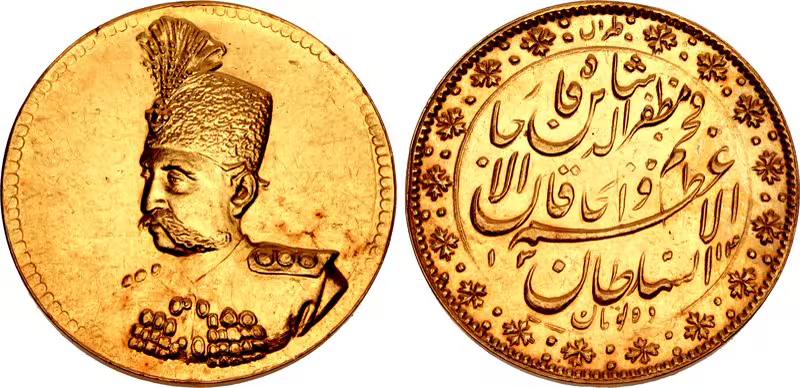
Mozaffar al-Din Shah — Tehran Mint
Mozaffar al-Din Shah signed the 1906 Constitution that established Iran's first parliament (Majles), making him the last absolute Qajar monarch. His machine-struck Tehran coinage in qirans and tomans set the standard for late-Qajar circulation.
| Date | 1896–1907 CE |
|---|---|
| Ruler / issuer | Mozaffar al-Din Shah Qajar |
| Mint | Tehran (machine-struck) |
| Metal | Silver |
| Era | Qajar Dynasty (1789 – 1925 CE) |
| Region | Iran |
Obverse and reverse
Obverse
Lion-and-Sun emblem in wreath with crown above; denomination and Hijri date.
Reverse
Ruler's name and title in Persian Nastaliq.
Historical context — Qajar Dynasty
Qajar coinage introduced the Lion-and-Sun emblem, mechanised minting (1877), and the country's first banknotes (1890, Imperial Bank of Persia). Denominations: toman (gold), qiran (silver), shahi (copper).
Read the full Qajar Dynasty essay →Frequently asked
- What is the Mozaffar al-Din Shah — Tehran Mint?
- Mozaffar al-Din Shah signed the 1906 Constitution that established Iran's first parliament (Majles), making him the last absolute Qajar monarch. His machine-struck Tehran coinage in qirans and tomans set the standard for late-Qajar circulation. It was struck in 1896–1907 CE at Tehran (machine-struck) under Mozaffar al-Din Shah Qajar.
- What metal and weight is it?
- Silver.
- What designs appear on it?
- Obverse: Lion-and-Sun emblem in wreath with crown above; denomination and Hijri date. Reverse: Ruler's name and title in Persian Nastaliq.