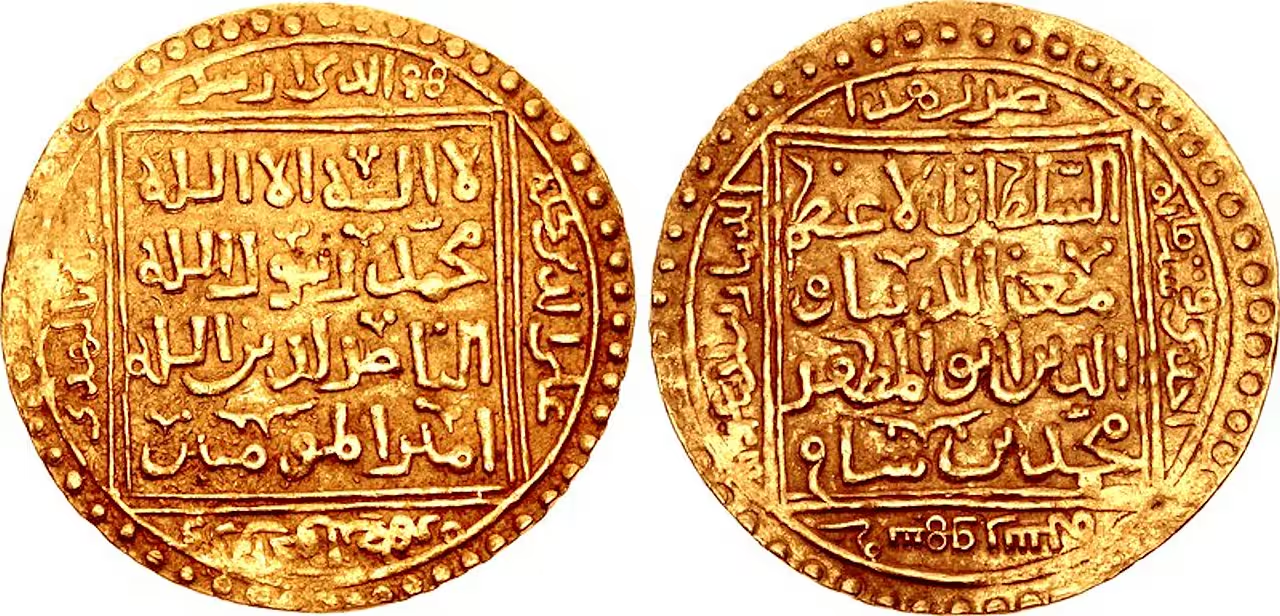
Arab-Sasanian & Early Islamic
Ghurid Gold Dinar of Mu'izz al-Din
Mu'izz al-Din (also Muhammad of Ghor) extended Ghurid rule from Afghanistan into northern India, founding the Delhi Sultanate's precursor state. His coinage circulated from Herat to the Gangetic plain.
| Date | AH 599–602 / 1202–1206 CE |
|---|---|
| Ruler / issuer | Mu'izz al-Din Muhammad of Ghor |
| Metal | Gold |
| Weight | ~4.0 g |
| Era | Arab-Sasanian & Early Islamic (651 – 1258 CE) |
| Region | Caliphate provinces of Iran |
Obverse and reverse
Obverse
Shahada with Caliph al-Nasir named; sultan's titles in marginal legend.
Reverse
Ruler's full titulature in Arabic.
Historical context — Arab-Sasanian & Early Islamic
Arab governors continued striking Sasanian-style drachms with added Arabic Kufic legends (bismillah). Abd al-Malik's reform (696/77 AH) introduced epigraphic-only Islamic coinage — the silver dirham and gold dinar.
Read the full Arab-Sasanian & Early Islamic essay →Frequently asked
- What is the Ghurid Gold Dinar of Mu'izz al-Din?
- Mu'izz al-Din (also Muhammad of Ghor) extended Ghurid rule from Afghanistan into northern India, founding the Delhi Sultanate's precursor state. His coinage circulated from Herat to the Gangetic plain. It was struck in AH 599–602 / 1202–1206 CE under Mu'izz al-Din Muhammad of Ghor.
- What metal and weight is it?
- Gold, weighing approximately ~4.0 g.
- What designs appear on it?
- Obverse: Shahada with Caliph al-Nasir named; sultan's titles in marginal legend. Reverse: Ruler's full titulature in Arabic.