Sasanian Empire
Shapur III Gold Dinar
Shapur III concluded the long partition of Armenia with Rome (387 CE), dividing it into Persian and Roman spheres. His gold issues are far rarer than the silver and were probably commemorative or diplomatic.
| Date | 383–388 CE |
|---|---|
| Ruler / issuer | Shapur III |
| Metal | Gold |
| Weight | ~7.4 g |
| Era | Sasanian Empire (224 – 651 CE) |
| Region | Iran, Iraq, Caucasus, Central Asia |
Obverse and reverse
Obverse
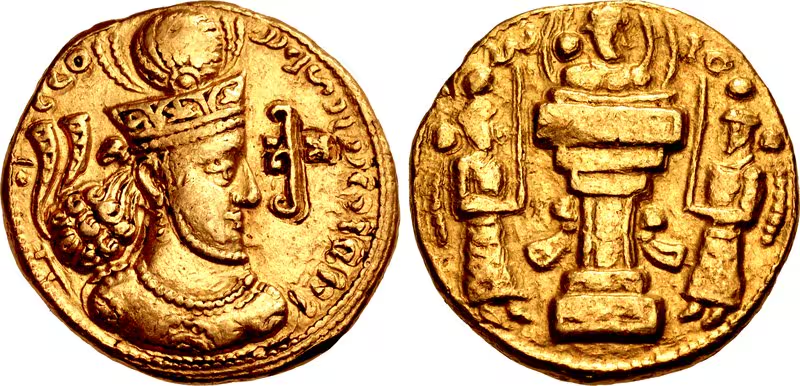
Crowned bust right with distinctive cap-and-globe crown; Pahlavi legend.
Reverse
Fire altar with attendants; mint signature.
Historical context — Sasanian Empire
The Sasanians produced the most artistically consistent and historically informative ancient coinage: thin, broad silver drachms with the king's crown on obverse and a Zoroastrian fire altar on reverse.
Read the full Sasanian Empire essay →Frequently asked
- What is the Shapur III Gold Dinar?
- Shapur III concluded the long partition of Armenia with Rome (387 CE), dividing it into Persian and Roman spheres. His gold issues are far rarer than the silver and were probably commemorative or diplomatic. It was struck in 383–388 CE under Shapur III.
- What metal and weight is it?
- Gold, weighing approximately ~7.4 g.
- What designs appear on it?
- Obverse: Crowned bust right with distinctive cap-and-globe crown; Pahlavi legend. Reverse: Fire altar with attendants; mint signature.