Arab-Sasanian & Early Islamic
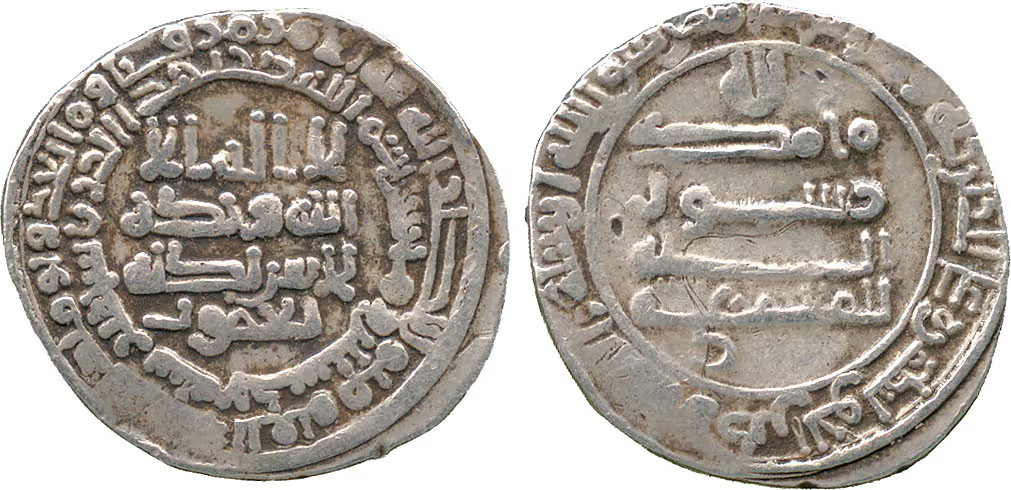
Saffarid Silver Dirham
The 'Coppersmith' rose from a militia leader in Sistan to ruling Iran from Fars to Khorasan — founder of the Saffarid dynasty and a hero of Iranian self-rule against the Abbasids.
| Date | 861–879 CE |
|---|---|
| Ruler / issuer | Ya'qub ibn al-Layth al-Saffar |
| Mint | Sistan / Zaranj |
| Metal | Silver |
| Weight | ~3.0 g |
| Era | Arab-Sasanian & Early Islamic (651 – 1258 CE) |
| Region | Caliphate provinces of Iran |
Obverse and reverse
Obverse
Shahada in Kufic.
Reverse
Caliph's name with Ya'qub's titles in margin.
Historical context — Arab-Sasanian & Early Islamic
Arab governors continued striking Sasanian-style drachms with added Arabic Kufic legends (bismillah). Abd al-Malik's reform (696/77 AH) introduced epigraphic-only Islamic coinage — the silver dirham and gold dinar.
Read the full Arab-Sasanian & Early Islamic essay →Frequently asked
- What is the Saffarid Silver Dirham?
- The 'Coppersmith' rose from a militia leader in Sistan to ruling Iran from Fars to Khorasan — founder of the Saffarid dynasty and a hero of Iranian self-rule against the Abbasids. It was struck in 861–879 CE at Sistan / Zaranj under Ya'qub ibn al-Layth al-Saffar.
- What metal and weight is it?
- Silver, weighing approximately ~3.0 g.
- What designs appear on it?
- Obverse: Shahada in Kufic. Reverse: Caliph's name with Ya'qub's titles in margin.