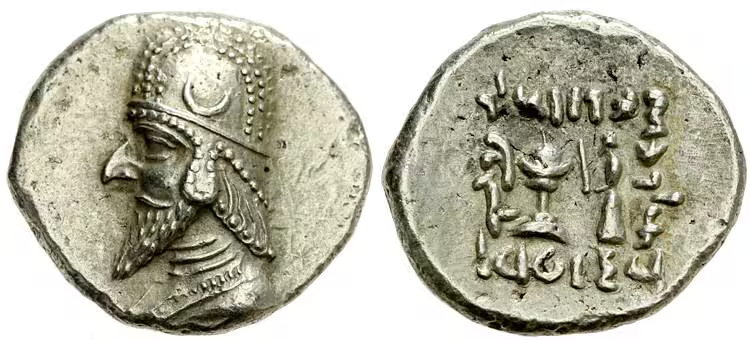
Parthian (Arsacid) Empire
Persis Frataraka Tetradrachm
The Frataraka ('Foremost') were local princes of Persis (modern Fars) who minted in a deliberate revival of Achaemenid iconography — the ideological seed-bed of the later Sasanian dynasty. Image: related Persis silver of Darius II of Persis.
| Date | c. 220–140 BCE |
|---|---|
| Ruler / issuer | Vahbarz / Vadfradad (Frataraka) |
| Mint | Istakhr (Persepolis) |
| Metal | Silver |
| Weight | ~16 g |
| Era | Parthian (Arsacid) Empire (247 BCE – 224 CE) |
| Region | Iran, Mesopotamia, Armenia |
Obverse and reverse
Obverse
Frataraka in Persian dress, satrap's cap with diadem.
Reverse
Standing king before fire altar with Achaemenid-style stepped façade; Aramaic legend.
Historical context — Parthian (Arsacid) Empire
The Arsacid kings issued silver drachms and bronze chalkoi at Ecbatana, Seleucia, Susa, Mithradatkart and Rhagae. Reverse types are remarkably consistent: the seated archer Arsaces.
Read the full Parthian (Arsacid) Empire essay →Frequently asked
- What is the Persis Frataraka Tetradrachm?
- The Frataraka ('Foremost') were local princes of Persis (modern Fars) who minted in a deliberate revival of Achaemenid iconography — the ideological seed-bed of the later Sasanian dynasty. Image: related Persis silver of Darius II of Persis. It was struck in c. 220–140 BCE at Istakhr (Persepolis) under Vahbarz / Vadfradad (Frataraka).
- What metal and weight is it?
- Silver, weighing approximately ~16 g.
- What designs appear on it?
- Obverse: Frataraka in Persian dress, satrap's cap with diadem. Reverse: Standing king before fire altar with Achaemenid-style stepped façade; Aramaic legend.