Parthian (Arsacid) Empire
Kingdom of Persis – Drachm of 'Darius'
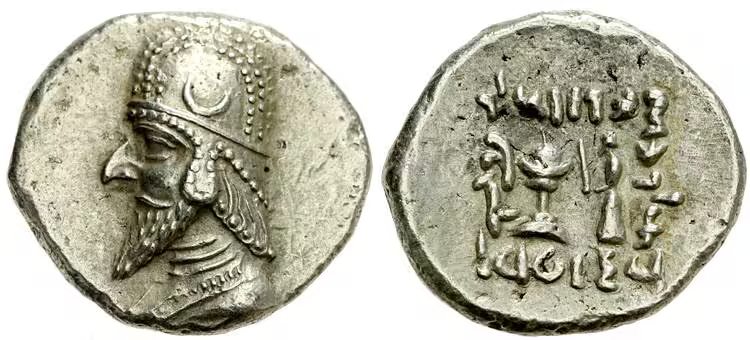
The semi-autonomous Frataraka and later kings of Persis ruled the Achaemenid homeland under Seleucid then Parthian overlordship. Their coins preserve Persian religious iconography (fire altar, royal figure) that the Sasanians would revive and standardise.
| Date | 1st century BCE – 1st century CE |
|---|---|
| Ruler / issuer | Darius II of Persis (Darayan) |
| Mint | Istakhr (Persepolis area) |
| Metal | Silver |
| Weight | ~4 g |
| Era | Parthian (Arsacid) Empire (247 BCE – 224 CE) |
| Region | Iran, Mesopotamia, Armenia |
Obverse and reverse
Obverse
Diademed bust of the local king with elaborate beard, in Aramaic-Persian style.
Reverse
Standing figure before a fire altar — proto-Sasanian iconography centuries before the Sasanian dynasty.
Historical context — Parthian (Arsacid) Empire
The Arsacid kings issued silver drachms and bronze chalkoi at Ecbatana, Seleucia, Susa, Mithradatkart and Rhagae. Reverse types are remarkably consistent: the seated archer Arsaces.
Read the full Parthian (Arsacid) Empire essay →Frequently asked
- What is the Kingdom of Persis – Drachm of 'Darius'?
- The semi-autonomous Frataraka and later kings of Persis ruled the Achaemenid homeland under Seleucid then Parthian overlordship. Their coins preserve Persian religious iconography (fire altar, royal figure) that the Sasanians would revive and standardise. It was struck in 1st century BCE – 1st century CE at Istakhr (Persepolis area) under Darius II of Persis (Darayan).
- What metal and weight is it?
- Silver, weighing approximately ~4 g.
- What designs appear on it?
- Obverse: Diademed bust of the local king with elaborate beard, in Aramaic-Persian style. Reverse: Standing figure before a fire altar — proto-Sasanian iconography centuries before the Sasanian dynasty.