Arab-Sasanian & Early Islamic
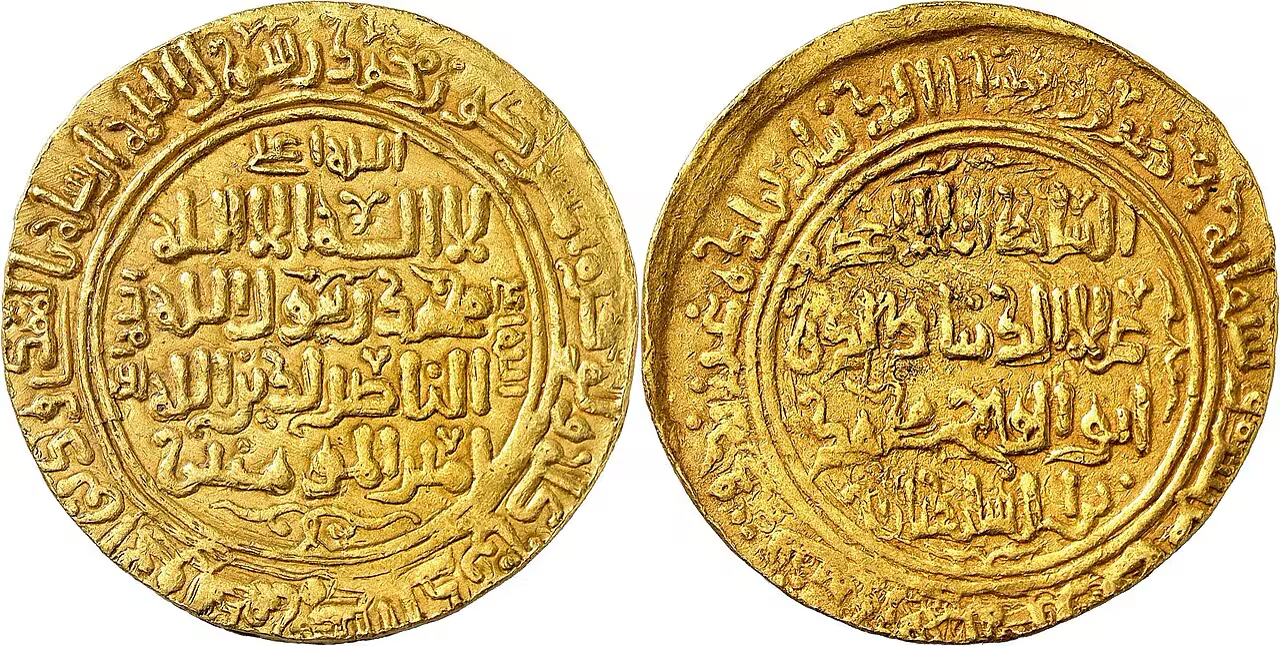
Khwarazmshah Gold Dinar of Muhammad II
Muhammad II ruled one of the largest empires of the Islamic Middle Ages — from the Caspian to the Indus — but his execution of Mongol envoys provoked Genghis Khan's catastrophic invasion of 1219–1221, ending the Khwarazmian state and beginning the Mongol era in Iran.
| Date | 1200–1220 CE |
|---|---|
| Ruler / issuer | 'Ala' al-Din Muhammad II |
| Metal | Gold |
| Era | Arab-Sasanian & Early Islamic (651 – 1258 CE) |
| Region | Caliphate provinces of Iran |
Obverse and reverse
Obverse
Shahada with Khwarazmshah titles.
Reverse
Caliph's name in Arabic; mint and date.
Historical context — Arab-Sasanian & Early Islamic
Arab governors continued striking Sasanian-style drachms with added Arabic Kufic legends (bismillah). Abd al-Malik's reform (696/77 AH) introduced epigraphic-only Islamic coinage — the silver dirham and gold dinar.
Read the full Arab-Sasanian & Early Islamic essay →Frequently asked
- What is the Khwarazmshah Gold Dinar of Muhammad II?
- Muhammad II ruled one of the largest empires of the Islamic Middle Ages — from the Caspian to the Indus — but his execution of Mongol envoys provoked Genghis Khan's catastrophic invasion of 1219–1221, ending the Khwarazmian state and beginning the Mongol era in Iran. It was struck in 1200–1220 CE under 'Ala' al-Din Muhammad II.
- What metal and weight is it?
- Gold.
- What designs appear on it?
- Obverse: Shahada with Khwarazmshah titles. Reverse: Caliph's name in Arabic; mint and date.