Arab-Sasanian & Early Islamic
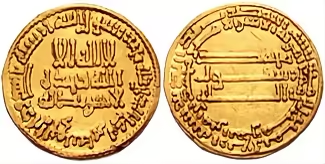
Abbasid Gold Dinar of Harun al-Rashid
Struck at the height of the Abbasid Caliphate's prestige under the patron of the 'Thousand and One Nights' court. Abbasid gold dinars circulated as the dominant trade coin from al-Andalus to Sogdia, and the standard was rigorously maintained for over two centuries.
| Date | AH 184 / 800 CE |
|---|---|
| Ruler / issuer | Caliph Harun al-Rashid |
| Mint | No mint name (likely Madinat al-Salam / Baghdad) |
| Metal | Gold |
| Weight | ~4.2 g |
| Era | Arab-Sasanian & Early Islamic (651 – 1258 CE) |
| Region | Caliphate provinces of Iran |
Obverse and reverse
Obverse
Shahada in three lines; marginal legend with Qur'an 9:33 and AH date.
Reverse
Continuation of Qur'anic legend, with caliph's name and title.
Historical context — Arab-Sasanian & Early Islamic
Arab governors continued striking Sasanian-style drachms with added Arabic Kufic legends (bismillah). Abd al-Malik's reform (696/77 AH) introduced epigraphic-only Islamic coinage — the silver dirham and gold dinar.
Read the full Arab-Sasanian & Early Islamic essay →Frequently asked
- What is the Abbasid Gold Dinar of Harun al-Rashid?
- Struck at the height of the Abbasid Caliphate's prestige under the patron of the 'Thousand and One Nights' court. Abbasid gold dinars circulated as the dominant trade coin from al-Andalus to Sogdia, and the standard was rigorously maintained for over two centuries. It was struck in AH 184 / 800 CE at No mint name (likely Madinat al-Salam / Baghdad) under Caliph Harun al-Rashid.
- What metal and weight is it?
- Gold, weighing approximately ~4.2 g.
- What designs appear on it?
- Obverse: Shahada in three lines; marginal legend with Qur'an 9:33 and AH date. Reverse: Continuation of Qur'anic legend, with caliph's name and title.