Timurid & Safavid
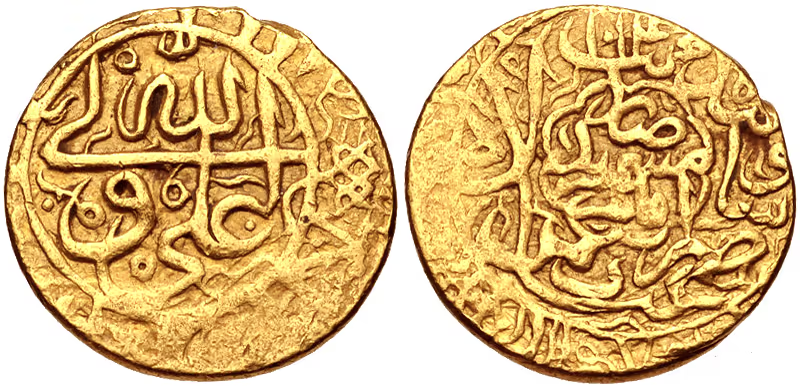
Shah Abbas I 'the Great' — Mashhad
Shah Abbas built modern Iran — a centralised administration, the relocated capital at Isfahan, and a silk monopoly that drew European trading companies. The 'abbasi' silver coin (~7.7 g) bearing his name became the gold standard of Indian Ocean trade for two centuries.
| Date | 1588–1629 CE |
|---|---|
| Ruler / issuer | Shah Abbas I |
| Mint | Mashhad |
| Metal | Silver |
| Era | Timurid & Safavid (1370 – 1736 CE) |
| Region | Greater Iran |
Obverse and reverse
Obverse
Shia kalima with Twelve Imams.
Reverse
Abbas's titles 'al-Sultan al-'Adil... Shah Abbas al-Husayni al-Musavi' and Mashhad mint name.
Historical context — Timurid & Safavid
Timurid rulers struck shahrukhi silver coins, Safavid shahs introduced the abbasi and shahi denominations with exquisite Nastaliq calligraphy and Shia inscriptions.
Read the full Timurid & Safavid essay →Frequently asked
- What is the Shah Abbas I 'the Great' — Mashhad?
- Shah Abbas built modern Iran — a centralised administration, the relocated capital at Isfahan, and a silk monopoly that drew European trading companies. The 'abbasi' silver coin (~7.7 g) bearing his name became the gold standard of Indian Ocean trade for two centuries. It was struck in 1588–1629 CE at Mashhad under Shah Abbas I.
- What metal and weight is it?
- Silver.
- What designs appear on it?
- Obverse: Shia kalima with Twelve Imams. Reverse: Abbas's titles 'al-Sultan al-'Adil... Shah Abbas al-Husayni al-Musavi' and Mashhad mint name.